
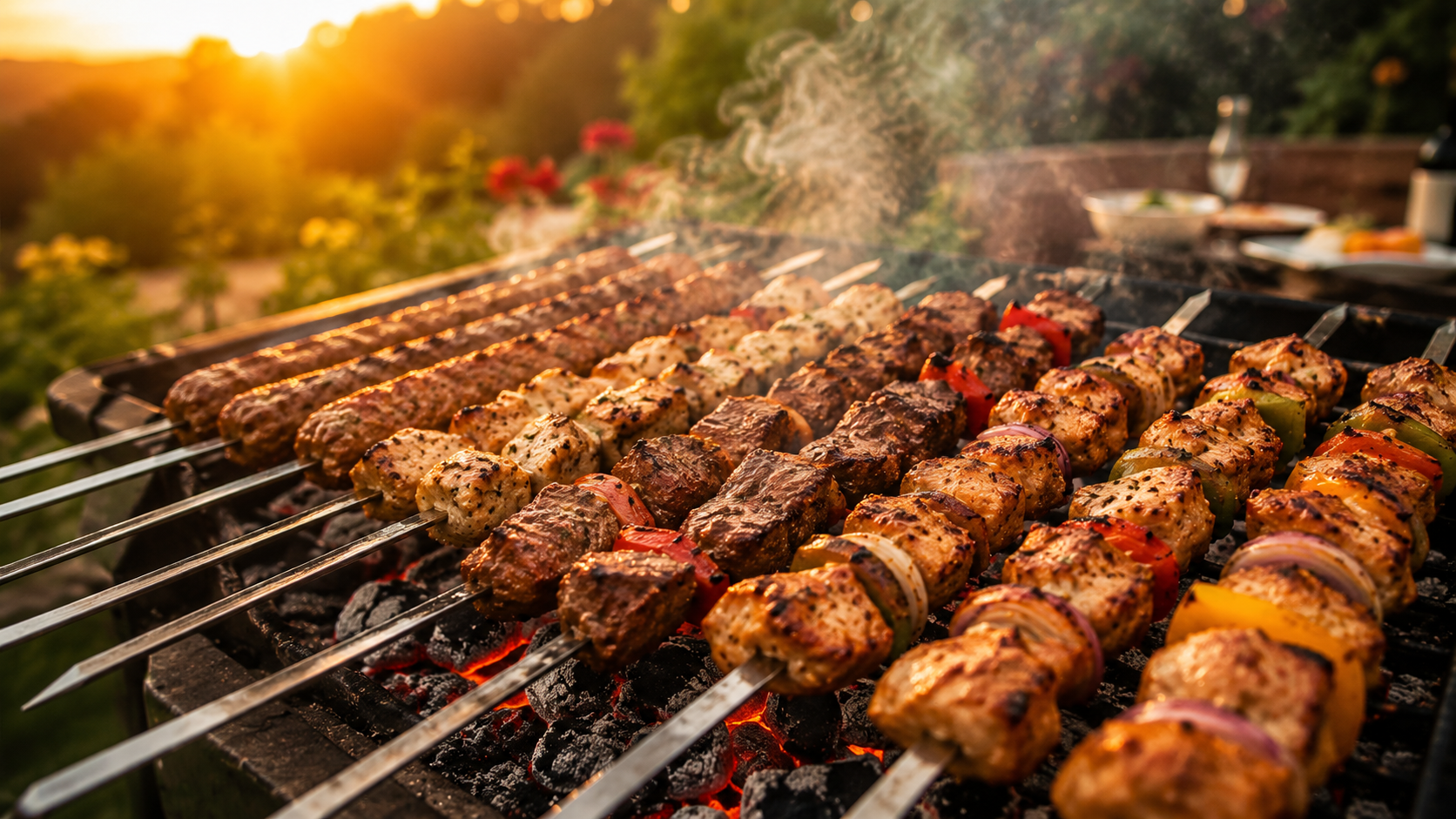
Skewers, Shish & Kebab Cooking Guide
What every home cook needs to know about cooking better kebabs over charcoal
Cooking skewers over charcoal is one of the oldest and best ways to cook meat.
Simple setup. Fast cooking. Big flavour.
Whether it is chicken shish, lamb skewers, koobideh, satay chicken skewers, or yakitori, good kebab cooking comes down to the same basics:
Good charcoal. Proper heat spacing. The right skewers. Patience with the fire.
This guide covers the core techniques, regional styles, and practical charcoal advice beginners need to understand skewer cooking properly.
If you want to cook better kebabs over charcoal, this is the place to start.
Quick Answer: What Are Skewers & Kebabs?
Skewers and kebabs are pieces of meat, vegetables, or minced meat cooked over charcoal, wood, or open fire using metal or bamboo skewers.
Different regions have different styles, including:
-
Chicken shish
-
Lamb shish
-
Adana kebab
-
Koobideh
-
Satay chicken skewers
-
Yakitori
-
Souvlaki
-
Souvla
-
Shashlik
Most traditional kebab cooking is done over charcoal because the high dry heat cooks quickly while adding smoke flavour at the same time.
Good charcoal makes a massive difference with skewers because cooking happens fast and close to the fire.
What Are Skewers & Kebabs?
The word "kebab" covers a huge range of charcoal-cooked foods from different cultures.
Some use chunks of meat. Others use minced meat moulded directly onto skewers. Some cook directly over open charcoal. Others cook higher above embers for gentler heat.
Skewer cooking is popular because it is:
-
Fast
-
Flexible
-
Social
-
Great over charcoal
-
Perfect for feeding groups
A common mistake is assuming all kebabs cook the same way. Different meats, skewer sizes, and charcoal setups all change how the food cooks.
|
💡 Erik's Tip Don't judge a kebab recipe by its ingredient list alone. The skewer type and the charcoal setup change the result just as much as the marinade does. |

Why Charcoal Works Best For Skewers
Charcoal and kebabs belong together.
The dry heat from charcoal helps:
-
Brown meat quickly
-
Build a proper crust
-
Render fat properly
-
Add smoke flavour
-
Cook evenly across the skewer
Gas BBQs can cook skewers, but charcoal gives better flavour and better heat intensity. Especially for:
-
Lamb shish
-
Adana kebab
-
Koobideh
-
Yakitori
-
Greek souvlaki
Fat dripping onto charcoal creates smoke that rolls back around the meat during cooking. That flavour is hard to replicate any other way.
Cheap charcoal often creates dirty smoke and inconsistent heat. Good-quality lump charcoal burns cleaner and reacts faster when adjusting airflow.
Different Skewer Styles Around The World
Nearly every culture has its own version of skewers cooked over fire. Different meats, spices, and charcoal setups create completely different cooking styles.
Popular styles include:
-
Turkish skewers
-
Persian kebabs
-
Greek souvlaki
-
Cypriot souvla
-
Japanese yakitori
-
Indonesian satay
-
Argentinian fire cooking skewers
-
Eastern European shashlik
The cooking principles stay similar:
-
Good heat
-
Proper spacing
-
Correct skewer choice
-
Controlled airflow
Turkish & Mediterranean Skewers
Turkish and Mediterranean charcoal cooking focuses heavily on direct charcoal grilling. Usually using:
-
Flat skewers
-
Mangal grills
-
Lamb
-
Chicken
-
Minced meat kebabs
Popular styles include:
-
Chicken shish
-
Lamb shish
-
Adana kebab
These styles cook relatively close to charcoal for strong direct heat. Beginners often place skewers too low over aggressive charcoal. That usually burns the outside before the inside cooks properly.
If you want to learn proper charcoal spacing and skewer setup, our chicken shish recipe covers the basics clearly.

Persian Kebabs & Koobideh
Persian kebab cooking relies heavily on wide flat skewers and very hot charcoal.
Koobideh uses seasoned minced meat pressed directly onto wide skewers. The wide skewer helps:
-
Support the meat
-
Reduce spinning
-
Hold shape during cooking
A common beginner mistake is using round skewers for koobideh. The meat often falls or spins immediately once fat starts rendering.
Proper charcoal spacing also matters heavily with koobideh because flare-ups happen fast. Wide, flat Adana-style skewers are specifically designed for minced meat kebabs like koobideh and kofta.
Greek Souvlaki
Greek souvlaki usually uses smaller skewers with chunks of pork, chicken or lamb cooked directly over charcoal.
This style cooks quickly and relies on:
-
High heat
-
Smaller meat pieces
-
Fast cooking
-
Simple seasoning
Flat skewers help keep smaller pieces stable during cooking. Most people assume souvlaki needs massive flames. In reality, glowing charcoal gives better control and more even cooking.
A traditional Greek souvlaki rub is a simple way to season it properly.
Cypriot Souvla
Souvla uses larger chunks of meat cooked slowly over charcoal on longer skewers or rotisserie skewers. Very common in Cyprus. Usually cooked with:
-
Lamb
-
Chicken
-
Pork
Unlike smaller kebabs, souvla cooks slightly higher above the charcoal and slower over steady heat. This helps larger pieces cook evenly while building colour gradually.
Our beginner guide to souvla and our overview of the Cyprus BBQ explain traditional charcoal setups, skewer spacing, and cooking methods in detail.
Japanese Yakitori
Yakitori focuses heavily on precision and charcoal control. Usually using:
-
Smaller skewers
-
Chicken cuts
-
Binchotan charcoal
-
Narrow charcoal grills
Different chicken parts cook differently. That is a huge part of yakitori cooking. The charcoal is often very hot but tightly controlled.
A common mistake is overcrowding skewers too closely together. That traps heat and affects airflow.
Traditional yakitori is cooked over Binchotan charcoal, prized for its high heat and clean, low-smoke burn.
Indonesian Satay
Satay chicken skewers are usually smaller skewers cooked quickly over direct charcoal heat. This style relies on:
-
Thin meat pieces
-
Fast cooking
-
High heat
-
Frequent turning
Because satay cooks quickly, charcoal management matters even more. Too much heat too early burns the marinade fast. Smaller charcoal zones usually work better for satay cooking.

Argentinian Fire Cooking Skewers
Argentinian fire cooking often uses larger skewers cooked beside or above wood embers rather than directly over flames. This style focuses more on:
-
Ember cooking
-
Steady heat
-
Simplicity
-
Fire control
The heat is usually gentler than Turkish-style direct charcoal grilling. Good fire management matters more than aggressive heat.
Flat vs Round Skewers
This matters more than beginners realise.
Flat Skewers
Best for:
-
Chicken shish
-
Lamb skewers
-
Kofta
-
Adana
-
Koobideh
Flat skewers stop meat from spinning during cooking. They also hold heavier meats more securely.
Round Skewers
Best for:
-
Vegetables
-
Marshmallows
-
Smaller lighter foods
Round skewers are simpler but allow meat to rotate more easily. Most serious kebab cooking uses flat skewers.
If you are unsure what to buy, our guide comparing skewer types explains the pros and cons of flat, round, and square skewers properly.
Metal vs Bamboo Skewers
Both work. But they suit different cooking styles.
Metal Skewers
Best for:
-
Charcoal grilling
-
Repeated use
-
Heavier meats
-
High heat cooking
Metal skewers conduct heat into the centre of the meat, helping food cook more evenly.
Bamboo Skewers
Best for:
-
Satay
-
Smaller skewers
-
Lighter foods
-
Shorter cooks
|
⚠️ Important Note Bamboo skewers need soaking in water for at least 30 minutes before cooking, or they will burn quickly. A common mistake is using thin bamboo skewers directly over aggressive charcoal heat without soaking them first. |
Choosing The Right Skewers For Different Meats
Different meats need different skewer setups.
|
Meat |
Recommended Skewer |
|
Chicken Shish |
Flat metal skewers |
|
Lamb Shish |
Smaller cuts: square skewers; bigger cuts like backstrap flat, wide skewers |
|
Koobideh |
Very wide flat skewers |
|
Satay |
Bamboo or thin metal skewers |
|
Yakitori |
Thin skewers |
|
Souvla |
Rotisserie skewers |
|
Vegetables |
Round or flat skewers |
Heavy meats usually need wider skewers for support and stability.
Don't Over-Marinate Meat
Marinades help flavour meat, but too much acidic marinade can create problems during charcoal cooking. Especially with:
-
Lemon juice
-
Vinegar
-
Yoghurt
-
Pineapple
Leaving heavily acidic marinades overnight can soften the meat too much, causing it to become mushy, break apart, or fall off skewers once the fat starts rendering. This becomes a bigger issue with:
-
Chicken shish
-
Lamb skewers
-
Koobideh
-
Softer cuts of meat
A common mistake is assuming longer marinating always means better flavour. Often, a few hours are enough for smaller kebab cuts.
How To Set Up Charcoal For Skewers
Charcoal setup changes everything. Especially with kebab cooking.
Build Even Charcoal Beds
You want consistent heat across the cooking area. Uneven charcoal creates uneven cooking.
Long, narrow charcoal beds usually work better for skewers than deep, concentrated charcoal piles. This gives:
-
More even heat across the skewer
-
Better airflow
-
Easier skewer rotation
-
Less aggressive flare-ups
Traditional mangal grills work so well because they naturally create long, even charcoal beds designed specifically for skewer cooking.
Avoid Massive Flames
You want glowing charcoal, not fire blasting the meat constantly. Fat dripping onto charcoal will naturally create some flare-ups. That is normal.
Leave Airflow Space
Charcoal needs airflow to burn properly. Packing charcoal too tightly restricts oxygen and creates dirty smoke.
Match Charcoal Height To The Meat
Smaller skewers can cook closer to charcoal. Larger skewers usually need more distance from the heat.
|
💡 Erik's Tip Build a long, narrow charcoal bed rather than one deep pile for skewer cooking. It gives more even heat across the length of the skewer and makes rotation far easier. |
Fire Management For Kebab Cooking
Fire management is one of the biggest differences between average kebabs and properly cooked skewers.
Good charcoal cooks evenly. Bad fire management creates:
-
Burnt edges
-
Raw centres
-
Bitter smoke
-
Dry meat
Practical Fire Tips
Rotate Skewers Often
Especially with high direct heat.
Add Charcoal Gradually
Beginners often overload charcoal early. Build heat slowly instead.
Watch Flare-Ups
Fat dripping onto charcoal creates flames quickly. Move skewers temporarily if flames get aggressive.
Wind changes skewer cooking quickly because the meat sits so close to the charcoal. A windy afternoon can increase charcoal intensity far faster than beginners expect.

Use Clean-Burning Charcoal
Dirty smoke sticks to meat quickly during skewer cooking because the food sits close to the charcoal.
Small Skewers Cook Faster Than Most People Expect
Small skewers cook extremely quickly over charcoal. Especially:
-
Satay
-
Yakitori
-
Small chicken skewers
-
Thin lamb skewers
Beginners often walk away for a minute and come back to burnt kebabs. High direct heat combined with smaller meat pieces speeds cooking up fast.
The smaller the meat pieces, the more attention the skewers need. This is why experienced skewer cooks constantly rotate and watch the charcoal during the cook instead of setting and forgetting.
Common Beginner Mistakes
Everyone makes mistakes learning skewers. That is part of it.
Overcrowding The Skewers
Too much meat prevents even cooking.
Uneven Meat Sizes
Different sizes cook at different speeds.
Cooking Over Flames
Glowing charcoal cooks better than aggressive flames.
Poor Charcoal Quality
Cheap charcoal creates inconsistent heat and bad smoke.
Not Preheating The Charcoal Properly
Half-lit charcoal creates unstable cooking temperatures.
Using The Wrong Skewers
Wide meats need wider skewers. Simple.
Why Meat Spins Or Falls Off Skewers
This is one of the most common beginner problems. Usually caused by:
-
Round skewers
-
Meat pieces are too large
-
Minced meat too wet
-
Poor meat compression
-
Cooking too aggressively, too early
Fat softens the meat as it cooks. That is why proper skewer choice matters so much.

Best Charcoal For Skewers
Good charcoal changes everything with kebab cooking. You want charcoal that:
-
Burns evenly
-
Produces clean smoke
-
Reacts well to airflow
-
Holds heat properly
Hardwood lump charcoal is usually the best option for skewers because it burns hot and responds quickly when adjusting heat.
Smaller charcoal pieces burn faster. Larger, denser pieces burn longer and steadier. For fast-cooking skewers, charcoal responsiveness matters more than extremely long burn times.
Beginner Skewer Cooking Setup
You do not need a massive BBQ setup to cook good kebabs. A simple beginner setup usually includes:
-
Charcoal BBQ or mangal grill
-
Lump charcoal
-
Flat skewers
-
Heat-resistant gloves
-
Tongs
-
Meat thermometer
As you learn more, you can branch into:
-
Cyprus grills
-
Parrillas
-
Dedicated charcoal grills
Simple setups often cook the best food once the charcoal management is right.
Essential BBQ Tools & Accessories
The right tools make charcoal cooking easier. Especially for beginners. Useful tools include:
-
Flat skewers
-
Wide skewers
-
Round skewers
-
BBQ gloves
-
Knife sets
-
Chimney starters
-
Meat thermometers
-
Charcoal baskets
-
Fire pokers
A good thermometer removes guesswork completely. Especially with chicken skewers and larger meat cuts.
Related Recipes & Guides
If you want to learn more about charcoal skewer cooking, these guides are a good place to start:
You can also browse our range of:

Frequently Asked Questions
These are the questions we get asked most often about skewer and kebab cooking over charcoal.
|
What skewers are best for kebabs? Flat metal skewers are usually best for kebabs because they stop the meat from spinning during cooking. |
|
Why does meat spin on skewers? Usually, this is because round skewers are being used or the meat is too heavy for the skewer size. |
|
What charcoal is best for skewers? Hardwood lump charcoal is usually best because it burns hot, clean, and responds quickly to airflow changes. |
|
Can you cook skewers on a gas BBQ? Yes. But charcoal usually gives better flavour and stronger direct heat. |
|
Why does minced meat fall off skewers? Usually from a wet mixture, poor compression, the wrong skewers, or too much heat too early. |
|
Should skewers cook directly over charcoal? Usually yes, but the distance from the charcoal matters heavily depending on the meat and cooking style. |
|
Are bamboo skewers good for BBQ cooking? They work well for smaller skewers and satay but need soaking first to reduce burning. |
|
What is the difference between souvlaki and souvla? Souvlaki usually uses smaller skewers cooked quickly over charcoal. Souvla uses larger meat pieces cooked more slowly on longer skewers or rotisserie setups. |
Ready To Start Cooking Better Skewers?
Good kebab cooking is mostly about understanding charcoal, heat spacing, and the right skewers for the job.
Start simple. Use good charcoal. Control the fire properly. Do not rush the heat.
The more skewers you cook, the easier charcoal management becomes.
Browse our range of flat skewers, Cyprus grills, charcoal BBQs, lump charcoal and BBQ accessories at Sydney BBQs & Rotisseries.