
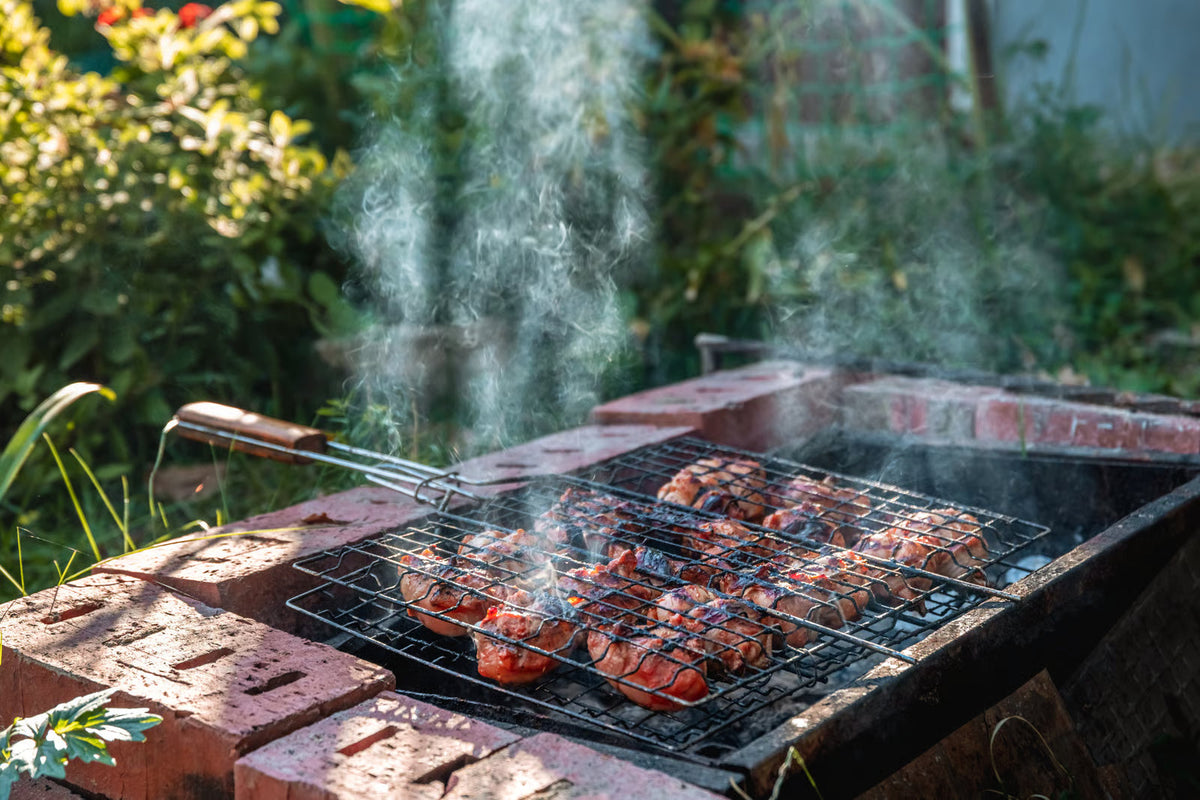
Airflow, charcoal placement, grill height, and the right technique. Here's what actually works
In Summary
-
Airflow, charcoal quality, charcoal quantity, and cooking height are the 4 biggest factors that control charcoal BBQ temperature.
-
Kettle BBQs (like Webers) rely on adjusting air vents, while Parrillas (Argentinian style) control heat by raising or lowering the grill grate.
-
Open charcoal grills can be cooled quickly by using ash, charcoal movement, or small amounts of water.
A huge difference between gas and charcoal BBQs is that you cannot just adjust the temperature. Instead, you control the heat by managing oxygen, charcoal, ember placement, and cooking distance. Once you understand how charcoal behaves, temperature control becomes very simple.
Understanding Fire
A fire needs three things to survive:
1. Fuel: charcoal, briquettes or wood
2. Oxygen: airflow feeding the fire
3. Heat: enough energy to keep the fuel burning
Remove or reduce any one of these and the fire becomes weaker.
This is why all charcoal temperature control methods work:
|
Method |
What's Happening |
|
Closing kettle vents |
Reduced oxygen |
|
Sprinkling ash on charcoal |
Reduced oxygen |
|
Moving charcoal apart |
Reducing fuel concentration |
|
Raising a Parrilla grill |
Reducing heat reaching the food |
|
Adding water to flare-ups |
Reducing heat |
|
Adding more charcoal |
Increasing fuel |
|
Opening vents |
Increased oxygen |
Once you understand this, temperature control becomes much easier because every adjustment is affecting either fuel, oxygen, or heat.

|
💡 Erik's Tip Think of heat control as three levers: fuel, oxygen, and distance from the fire. Every method — whether it's adjusting a vent, raising a grate, or sprinkling ash — is just pushing one of those levers up or down. |
What Controls Temperature on a Charcoal BBQ?
Three things determine how hot your charcoal BBQ runs:
-
Airflow
-
Amount of charcoal
-
Distance from the heat
Most temperature problems come from one of these being out of balance.
For example, any of these factors will create excessive heat:
-
Too much airflow
-
Too much charcoal
-
Cooking too close to the charcoal
Before adding or removing fuel, always look at these three areas first.
How To Control Temperature on a Kettle BBQ
Kettle BBQs have adjustable vents you can use to control airflow. The more oxygen that reaches the charcoal, the hotter it burns.
To Increase The Temperature
-
Open the bottom vent
-
Open the top vent
-
Add more lit charcoal if required
-
Move charcoal around to remove excess ash blocking airflow
To Reduce Temperature
-
Begin to close the bottom vent
-
Begin to close the top vent
-
Reduce the amount of burning charcoal
-
Close the lid to prevent wind from feeding the fire
|
⚠️ Important Note A common mistake is to shut all vents completely. This often creates dirty smoke and unstable combustion. You want to control the airflow, not cut it off completely. Good airflow actually makes a big difference in kettle BBQs. |

How To Control Temperature on a Parrilla or Santa Maria
Argentinian-style Parrilla grills use a completely different approach. Instead of adjusting vents, you adjust the cooking height.
Lower Grill Height
-
More heat
-
Faster cooking
-
Better crust development
-
Stronger searing
Higher Grill Height
-
Slower cooking
-
More control
-
Better for large cuts
-
Reduced flare-ups
This is one of the reasons Parrillas are so effective. The fire can remain exactly the same while the cooking temperature changes simply by moving the grate. As the fire begins to die down during long cooks, you can simply lower the grill.
|
💡 Erik's Tip For a deeper understanding of ember cooking and grill height control, see our Beginner Guide to Parrilla & Asado Cooking. |
How To Control Temperature on Open Charcoal BBQs
Traditional Turkish, Lebanese, and Middle Eastern charcoal grills often have no lid and no adjustable vents. Heat is controlled directly at the charcoal level.
Move The Charcoal
One of the simplest methods is moving charcoal around.
-
Spread charcoal out to reduce heat
-
Push charcoal together when more heat is needed
Long, even charcoal beds generally cook more consistently than deep charcoal piles. This is why mangal grills work so well for skewers.
Add Fresh Charcoal Gradually
Beginners often add too much fuel at once. A better approach is:
-
Add small amounts
-
Allow the charcoal to settle
-
Build heat gradually
Small adjustments are easier to control.
Using Ash To Reduce Heat
This is an old school method used throughout the region. If the charcoal is too hot or aggressive, a small amount of old ash can be sprinkled over the hot charcoal. The ash restricts the oxygen reaching the charcoal.
This helps:
-
Calm overly aggressive heat
-
Slow down roaring charcoal
-
Reduce sudden flare-ups
|
⚠️ Important Note Only use a light dusting of ash. Too much ash can smother the charcoal completely. |
Using Water To Reduce Heat
Another traditional method is using a bottle with a tiny hole in the cap. A small amount of water can then be dripped onto problem areas. This is commonly used when:
-
Fat causes flare-ups
-
Charcoal becomes excessively hot
-
Small heat adjustments are needed
The key word is small. You are not trying to extinguish the charcoal. You are simply calming an aggressive section of the fire. Too much water can kill the fire. Remember, less is more.
Can Salt Reduce Charcoal Heat?
Some charcoal cooks also sprinkle a small amount of coarse salt onto very aggressive charcoal. The goal is not temperature control in the same way as vents or airflow. Instead, it helps calm small flare-ups and reduce aggressive surface flames.
This technique is common around charcoal skewer cooking and open-fire grilling. Like water and ash, moderation matters.
How To Control Flare-Ups
Flare-ups happen when fat drips onto hot charcoal. Small flare-ups are normal, but large flames are usually a sign that the heat is too hot.
To reduce flare-ups:
-
Move food temporarily
-
Spread charcoal out
-
Raise the cooking grate
-
Lightly dust hot charcoal with ash
-
Apply a few drops of water if required
-
Avoid excessive fat directly over the hottest coals

|
⚠️ Important Note If using water or ash to control the fire, move the food away first — the process can be dusty and may affect the food directly above. |
Charcoal Temperature Control Methods Compared
|
Method |
Best For |
Speed |
|
Vent adjustment |
Kettle BBQs |
Fast |
|
Raising grill height |
Parrilla and Santa Maria grills |
Instant |
|
Moving charcoal |
Open charcoal grills |
Fast |
|
Adding charcoal |
Increasing heat |
Medium |
|
Ash dusting |
Excessively hot charcoal |
Fast |
|
Small amounts of water |
Flare-ups and hot spots |
Immediate |
|
Salt sprinkling |
Minor flare-ups |
Immediate |
Common Temperature Control Mistakes
Using Too Much Charcoal
More charcoal doesn't mean better cooking. It often creates unnecessary heat.
Chasing Flames
Large flames look impressive but cook poorly. Good embers cook better than flames.
Constantly Adjusting Everything
Make one adjustment. Wait. Observe the result. Then adjust again if necessary.
Ignoring Airflow
Many temperature problems start with poor airflow. Ash build-up, blocked vents, and overcrowded charcoal all affect combustion.
Which Method Works Best?
The best method depends on the BBQ:
-
Kettle BBQs: Adjust vents
-
Parrillas: Adjust grill height
-
Santa Maria grills: Adjust grill height
-
Mangals: Move charcoal
-
Lebanese charcoal grills: Move charcoal and manage embers
-
Rotisseries: Adjust charcoal placement and cooking height
Frequently Asked Questions
What is the easiest way to reduce heat on a charcoal BBQ?
Reduce airflow, spread charcoal apart, or increase the distance between the food and charcoal. These are usually the simplest methods and work across most BBQ types.
Can I spray water on charcoal?
Yes, but only small amounts. Too much water creates steam, excess ash, and can totally kill the fire. A bottle with a tiny hole in the cap gives you the best control.
Does ash reduce charcoal heat?
A small sprinkle of old ash can calm aggressive heat by reducing the oxygen reaching the fuel. Use it lightly — too much will smother the charcoal completely.
Why is my charcoal BBQ getting hotter instead of cooler?
Too much airflow, wind, or too much fuel are the most common causes. Check whether a breeze is feeding the fire and look at whether your vents are open further than needed.
Should I cook over flames or embers?
Embers produce more stable heat and better cooking conditions than large flames. Flames are hard to control and often cook the outside of food faster than the inside.
Can salt stop flare-ups?
Some charcoal cooks sprinkle salt over flare-ups to minimise them, but airflow and charcoal management are the most reliable ways to control heat long-term.
Glossary
|
Embers |
Glowing charcoal that produces stable, radiant heat. |
|
Flare-Up |
Flames caused by fat dripping onto hot charcoal. |
|
Radiant Heat |
Heat transferred directly from hot coals and embers. |
|
Two-Zone Fire |
A BBQ setup with a hot area and a cooler area. |
Related Guides & Products
Need charcoal, fire tools or a reliable BBQ thermometer? Good temperature control starts with quality fuel, proper airflow, and a fire that's working with you rather than against you. Browse our full range of charcoal BBQs and accessories at Sydney BBQs & Rotisseries.