
How to Light Charcoal Properly
Chimney starters, firelighters, airflow control, and better results from your first light.
A well-lit charcoal fire produces steady heat, clean smoke, and predictable cooking temperatures. A poorly lit fire creates dirty smoke, uneven heat, and frustration before the food even hits the grill.
The good news is that lighting charcoal is simple once you understand a few basics. Whether you are using lump charcoal or briquettes, the same principles apply.
Good embers cook better than flames.
This guide covers the best ways to light charcoal, common mistakes beginners make, and how to build a fire that cooks properly from the start. For a deeper guide on using your BBQ, see our beginner’s guide to using a charcoal grill.
|
Quick Answer |
|
To light charcoal properly: |
|
1. Fill a chimney starter with charcoal. |
|
2. Place natural firelighters underneath. |
|
3. Light the firelighters. |
|
4. Leave the chimney in a well-ventilated area. |
|
5. Wait 15 to 25 minutes until the charcoal is mostly covered with grey ash. |
|
6. Carefully pour the charcoal into the BBQ. |
|
7. Adjust vents and set up your cooking zones. |
What You Will Need to Light Charcoal Properly
-
Fireproof surface
-
Long-handled tongs or poker
Why Properly Lit Charcoal Matters
Many beginners rush through this stage.
When charcoal is not fully lit, it produces thick white smoke and unstable heat.
Properly lit charcoal gives:
-
Cleaner smoke
-
Better flavour
-
More even cooking
-
More predictable temperatures
-
Less fuel waste
The Best Way to Light Charcoal: Using a Chimney Starter
A chimney starter is the fastest and most reliable method for lighting charcoal. Here is the step-by-step process.
Step 1: Fill the Chimney
Fill the chimney starter with charcoal.
Step 2: Place Firelighters Underneath
Place 1 to 3 natural firelighters beneath the chimney. Avoid using excessive lighter fluid. Lighter fluid can leave unwanted flavours on food and often creates unnecessary flare-ups.
Step 3: Light the Firelighters
Light the firelighters and leave the chimney alone. Do not constantly move it around. The fire needs time to establish itself. Good airflow matters more than people realise.
Step 4: Let the Charcoal Burn
The charcoal will gradually ignite from the bottom upwards.
|
Fuel Type |
Approximate Time |
|
Lump charcoal |
15 to 20 minutes |
|
Briquettes |
20 to 30 minutes |
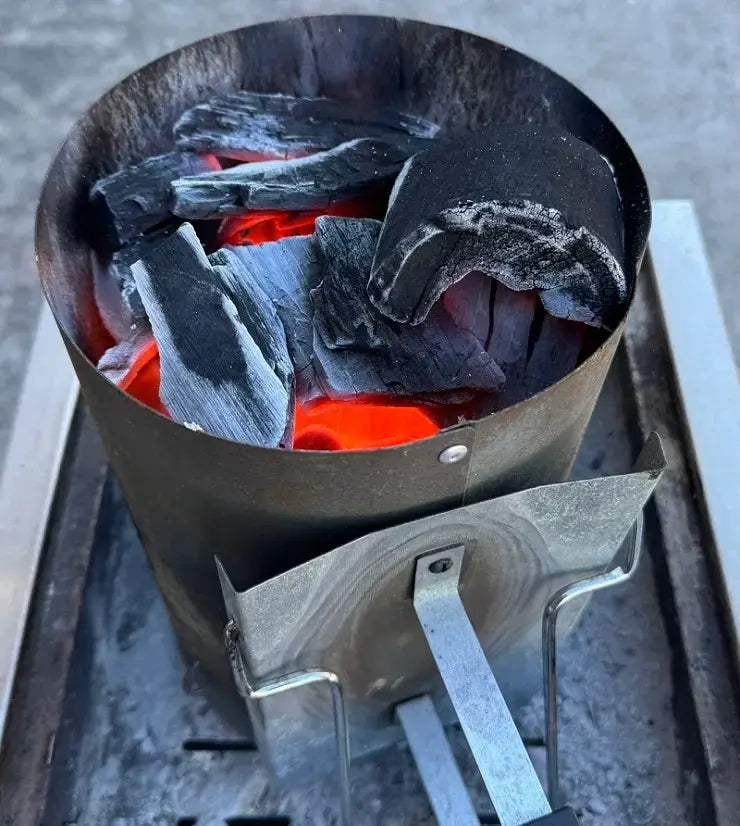
You are looking for glowing orange embers, light grey ash coating, and very little visible smoke.
Step 5: Pour the Charcoal Into the BBQ
Wearing heat-resistant BBQ gloves, carefully pour the charcoal into the BBQ. Arrange it according to your cooking style.

|
💡 Erik's Tip |
|
Two-zone cooking provides far more control than most people expect. Keep charcoal on one side for direct heat and leave the other side clear for indirect cooking. Once you try it, you will never go back to spreading charcoal evenly across the whole grill. |
For full details on cooking zone setup, see our guide on charcoal grilling tips and tricks.
How to Light Lump Charcoal
Lump charcoal behaves differently from briquettes.
Advantages
-
Lights faster
-
Burns hotter
-
Produces less ash
-
Responds faster to airflow changes
Challenges
-
More variation in charcoal size
-
Faster burn rate
For most charcoal BBQ cooks, quality hardwood lump charcoal is the easiest fuel to learn with. Read our full guide on the benefits of using lump charcoal for a detailed comparison.
How to Light Briquettes
Briquettes take longer to ignite but burn more consistently.
Advantages
-
Stable temperatures
-
Longer burn times
-
Consistent sizing
Challenges
-
Longer startup time
-
More ash production
Wait until the briquettes are mostly covered in ash before cooking. Half-lit briquettes create dirty smoke and uneven heat.
For a full comparison, see our guide on choosing the right BBQ fuel.
|
|

Common Charcoal Lighting Mistakes
Cooking Too Early
This is the biggest mistake beginners make. If the charcoal is still producing thick white smoke, it is not ready. Wait until the fire settles.
Using Too Much Charcoal
More charcoal does not automatically mean better cooking. Too much fuel often causes flare-ups, temperature spikes, and wasted charcoal. Start smaller and add fuel if needed.
Blocking Airflow
Charcoal needs oxygen. Common airflow mistakes include overloading charcoal baskets, closing vents too early, and letting ash build up. Poor airflow creates weak fires and dirty smoke.
Using Wet Charcoal
Charcoal absorbs moisture surprisingly easily. Wet charcoal lights poorly, produces excess smoke, and creates unstable heat. Always store charcoal somewhere dry.
|
⚠️ Common Mistake |
|
Never cook over thick white smoke. That smoke means the charcoal has not fully lit yet. The food will taste bitter, and cooking temperatures will be unstable. Patience at this stage saves a lot of frustration later. |
How to Know When Charcoal Is Ready to Cook On
Look for these signs before putting food on the grill:
-
Most charcoal is covered with light grey ash
-
Glowing orange embers are visible underneath
-
Little or no thick white smoke
-
Consistent heat across the charcoal bed
Avoid judging readiness by flames alone. Good embers cook better than flames.
For a full breakdown of ember stages and readiness signs, see our guide on how long charcoal takes to be ready.
Pro Tips for Better Charcoal Fires
-
Use a chimney every time: it creates more consistent fires and faster setup
-
Leave bottom vents open during startup: the fire needs oxygen to establish itself
-
Build cooking zones: direct and indirect zones make cooking far easier
-
Add charcoal before you need it: waiting until temperatures crash often causes unstable cooking
-
Watch smoke colour: thin blue or nearly invisible smoke is ideal, dirty smoke usually means the fire needs more airflow
|
|

Troubleshooting Charcoal That Will Not Light
The Fire Keeps Going Out
Possible causes: damp charcoal, poor airflow, or insufficient firelighters. Open vents, check for ash blockage, and always add properly lit charcoal from a chimney rather than raw, unlit fuel.
Thick White Smoke Will Not Stop
Usually caused by cooking too early, wet fuel, or restricted airflow. Wait for the charcoal to fully establish before cooking begins.
Charcoal Lights Unevenly
Possible causes: overpacked chimney, mixed charcoal sizes, or wind affecting ignition. Leave space for airflow between pieces and shield the chimney from direct wind.
For a complete troubleshooting guide, see our BBQ troubleshooting guide.
|
|

Related Guides and Further Reading
Continue learning with these guides:
→ How To Use a Charcoal Grill: Beginner's Guide
→ How To Light Lump Charcoal With a Chimney Starter
→ How To Light a Charcoal BBQ Grill
→ The Benefits of Using Lump Charcoal for Grilling
→ Choosing the Right Fuel For Your BBQ
→ The Art of Charcoal Grilling: Tips and Tricks
→ Beginner’s Guide To Smoking Meat
→ Everything You Need To Know About Spit Roasting
Frequently Asked Questions About Lighting Charcoal
These are the questions we get asked most often about lighting charcoal properly.
How long does charcoal take to light?Lump charcoal usually takes 15 to 20 minutes. Briquettes often take 20 to 30 minutes. |
Can I add charcoal during cooking?Yes. Add lit charcoal where possible to maintain stable temperatures. |
Is lump charcoal better than briquettes?Neither is always better. Lump charcoal lights faster and burns hotter, while briquettes burn longer and more consistently. |
Do I need a chimney starter?No, but a chimney starter is the easiest and most reliable method for lighting charcoal. |
Why is my charcoal producing thick white smoke?Usually, it is not fully lit, or the airflow is restricted. Wait longer and open the vents. |
Can I reuse leftover charcoal?Yes. Unburnt charcoal can often be reused on your next cook. |