|
In Summary |
|
Two-zone cooking splits your BBQ into a hot direct side for searing and a cooler indirect side for gentle cooking. |
|
It works on charcoal, gas and parrilla BBQs, and needs no extra equipment to get started. |
|
Moving food between zones gives you better crust, juicier centres and an easy fix for flare-ups. |
Ask any experienced charcoal cook for the one technique that will most improve your BBQ results, and two-zone cooking will come up almost every time.
It costs nothing, works on nearly any BBQ, and solves the most common backyard frustrations: burnt outsides, raw centres, and dinner lost to a flare-up.
If you have ever wondered how the pros sear a steak to a perfect crust while keeping the middle blushing pink, this is the answer.
Here is everything you need to know to start cooking with two zones.
What Is Two-Zone Cooking?
Two-zone cooking means dividing your BBQ into a hot side and a cooler side, then moving food between them as the cook demands.
The hot side sits directly over the coals or burners. This is your direct heat zone, where food picks up colour, char and crust.
The cooler side sits away from the heat source. This is your indirect zone, where food cooks gently in circulating warmth, much like an oven.
The technique is simple.
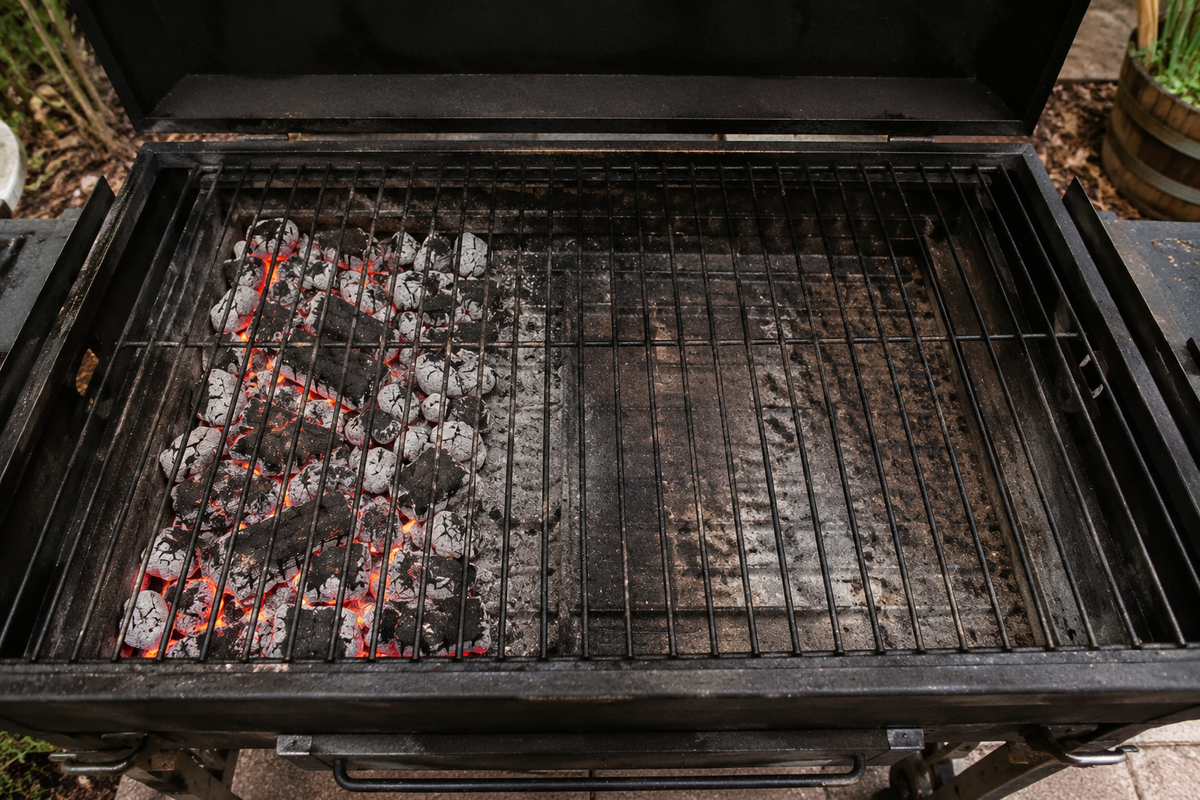
On a charcoal BBQ, pile your fuel on one side of the grate and leave the other side empty. On a gas BBQ, run one burner hot and leave the others off.
Our guide on charcoal grilling tips and tricks walks through the exact layouts for different BBQ setups.

Why Does Two-Zone Cooking Matter?
Control is the short answer.
A single bed of coals spread across the whole grill gives you one temperature and one option. Two zones give you choices for the entire cook.
Searing too fast? Slide the food across to the cooler side and let it finish gently.
Chicken skin looking pale? Move it over the coals for the final few minutes.
Fat dripping and flames leaping? Shift everything to the indirect side and let the flare-up die down.
Two-zone cooking also fixes the timing problem every host knows. The indirect side doubles as a holding zone, keeping cooked sausages and chops warm while the steaks finish, so everything lands on the table together.
|
💡 Erik's Tip |
|
The indirect zone is one of the most underused tools in backyard cooking. Once you start using it as a holding zone to keep food warm without overcooking it, you will never go back to juggling plates and timing everything at once. |
Which BBQs Are Best for Two-Zone Cooking?
Almost any BBQ with enough grill space can run two zones, though some make it easier than others.
Charcoal BBQs
Kettle and hooded charcoal BBQs are the classic choice. The lid traps heat and smoke, turning the indirect side into a genuine outdoor oven that can roast a whole chicken or a leg of lamb.
Parrilla BBQs
Parrilla BBQs manage zones through ember placement and grill height rather than a lid, giving you fine control over open-fire cooking in the Argentine style.
Gas BBQs
Gas BBQs with three or more burners make two-zone cooking effortless. Light the burners on one side, leave the others off, and you have instant zones with no fire management at all.

What Should You Cook With Two-Zone Heat?
Thick steaks are the obvious starting point. Sear hard over the coals, then finish on the indirect side until the centre hits your target temperature. You can also reverse the order, warming the steak gently before a final blast of direct heat for crust.
Chicken pieces transform with this method. Cook thighs and drumsticks through on the indirect side, then crisp the skin over the coals right at the end. The result is juicy meat and crackling skin without a hint of char-black bitterness.
Sausages, thick chops, burgers, whole fish and roasts all benefit too. A dusting from our range of BBQ rubs before the cook adds another layer of flavour.
What Do You Need to Get Started?
Very little, which is part of the appeal.
Quality fuel matters most. Lump charcoal burns hot and clean for searing, while briquettes hold steady temperatures for longer indirect cooks.
A chimney starter gets your coals glowing evenly, a good pair of tongs lets you shuffle food between zones, and a meat thermometer takes the guesswork out of doneness. You will find all three among our BBQ accessories.
From there, it comes down to practice. Light a two-zone fire this weekend, cook something simple like chicken thighs, and pay attention to how the food responds as you move it. Within a few cooks, managing heat will feel like second nature. Our beginner guide to charcoal grilling is a good next step if you are just starting out.

Frequently Asked Questions
|
Does two-zone cooking work on a gas BBQ? Yes. Light the burners on one side and leave the rest off. The lit side is your direct zone and the unlit side cooks indirectly, especially with the hood down. |
|
Is two-zone cooking the same as smoking? They are related. Smoking uses indirect heat over a long period with wood for flavour. Two-zone cooking is the broader technique, and adding a wood chunk to the coals lets you smoke on a standard kettle. |
|
Do I need extra equipment for two-zone cooking? No. It works with the BBQ you already own. A thermometer and chimney starter simply make the process easier and more consistent. |
|
What temperature should the indirect zone be? It depends on the cook. Aim for around 160 to 180 degrees Celsius when roasting chicken or lamb, and 110 to 130 degrees for low and slow cooks. Adjust by adding or removing charcoal and by opening or closing the vents. |
|
How much charcoal do you need for a two-zone fire? For most cooks, half to three-quarters of a chimney starter is plenty. The goal is a strong hot zone alongside a genuinely cooler side, so resist the urge to fill the whole grate. |
Glossary
Two-zone cooking: A BBQ technique that divides the grill into a hot searing side and a cooler cooking side.
Direct heat: Cooking food directly over the coals, flames or lit burners.
Indirect heat: Cooking food away from the heat source, usually with the lid closed.
Holding zone: Using the cooler side of the BBQ to keep cooked food warm without overcooking it.
Flare-up: A burst of flame caused by fat or marinade dripping onto hot coals.
Chimney starter: A metal cylinder that gets charcoal glowing quickly and evenly before you tip it into the BBQ.
Reverse sear: Cooking meat gently on the indirect side first, then finishing over direct heat for crust.
Lump charcoal: Natural hardwood charcoal that burns hot and clean, ideal for searing.
Briquettes: Compressed charcoal that burns steadily and predictably, suited to longer cooks.
Hood: The lid of a BBQ, which traps heat and smoke so the indirect zone works like an oven.
Related Guides
Learn more about BBQ technique and fire management:
→ The Art of Charcoal Grilling: Tips and Tricks
→ How To Use a Charcoal Grill: Beginner's Guide
→ BBQ For Beginners: Essential Grilling Tips
→ Choosing the Right Fuel For Your BBQ
→ The Benefits of Using Lump Charcoal for Grilling
Ready To Try Two-Zone Cooking?
Browse our full range of charcoal BBQs, gas BBQs, parrilla BBQs, lump charcoal and BBQ accessories at Sydney BBQs & Rotisseries.