
How To Cook Picanha On A Parrilla
TL: DR Summary Picanha, AKA rump cap, cooks beautifully over charcoal or wood embers. Keep the fire steady and cook over embers, not flames. Rest it well, then slice across the grain so it stays tender.
In Australia, most people know it as a rump cap. In Brazil, it is called Picanha, and in my opinion, Picanha is one of the best cuts you can cook on a Parrilla.
It has a thick, fat cap on top, plenty of beef flavour, and it loves charcoal.
You do not need to do much to it.
Good beef, salt, and embers.
That is most of the job.
The trick is not rushing the fire. Big flames look impressive, but they usually burn the fat before the inside is cooked.
Good embers cook better than flames.
The best way to cook Picanha on a Parrilla is over steady glowing embers. Start with the fat cap facing the heat, cook to about 50–53°C for medium rare, then rest for 15–20 minutes before slicing across the grain.
What Is Picanha?
Picanha is called rump cap in Australia. A triangle piece of beef from the top of the rump that has a thick layer of fat on one side. While cooking, the fat cap it melts slowly and helps keep the meat juicy. In Australia, whole rump caps are usually around 1.2kg to 1.8kg.
You can also cut it into steaks, reverse sear it, or cook it on skewers over a grill or a Rotisserie. I've covered all three in Picanha Three Ways: Whole, Steaks and Skewers. See our complete guide to spit roasting for more on rotisserie setups.
Equipment You'll Need
-
Whole Picanha or rump cap
-
Lump charcoal or hardwood
-
Sharp knife
-
BBQ gloves
-
Coarse salt
-
Beef rub, if you want one
Preparing The Picanha
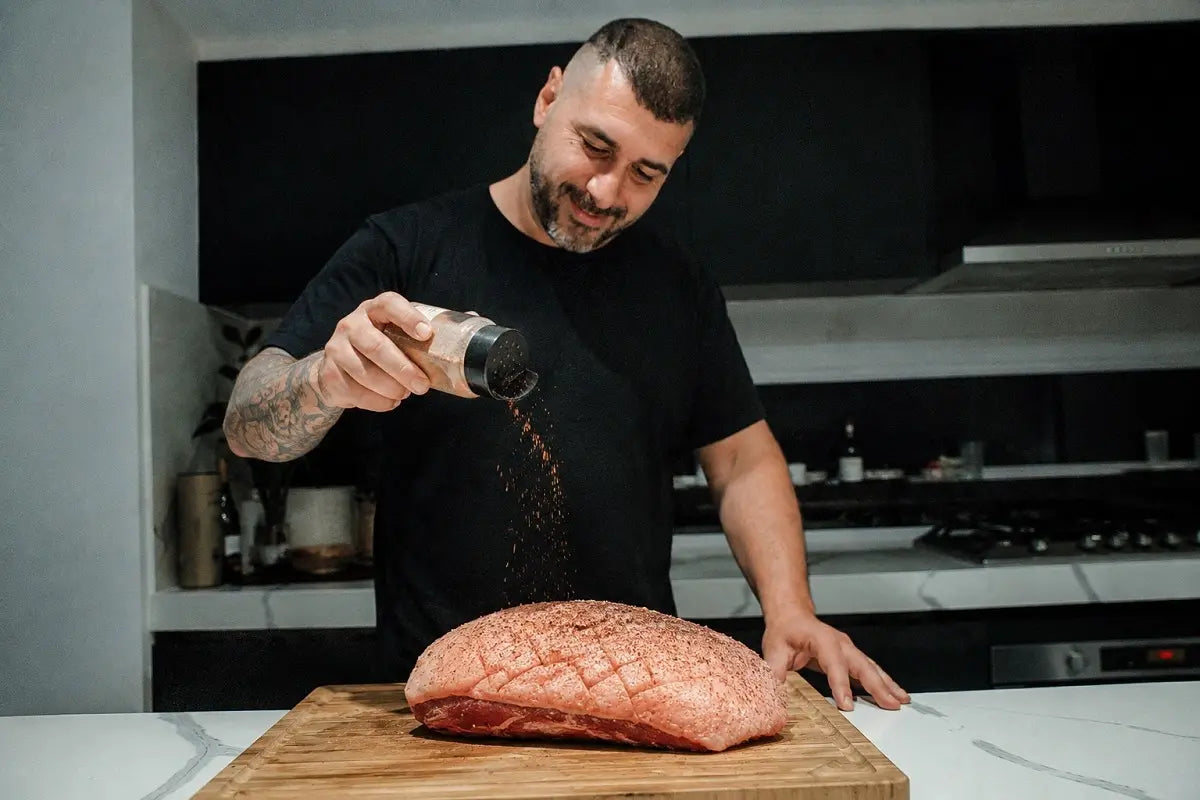
Take the Picanha out of the fridge 45–60 minutes before cooking. Pat it dry with a paper towel. Use a sharp knife to score the fat cap in a crosshatch pattern. Try not to cut the meat. (Scoring helps the fat render and gives the salt more places to sit.) Season all sides well with coarse salt or your preferred beef rub.
💡 Erik's Tip: Before you place the Picanha on the grill, check which way the grain runs. A lot of people cook Picanha perfectly, then slice it the wrong way. You can take a quick photo on your phone before cooking. It makes slicing much easier later.
How to Find The Grain Before Cooking
Look at the meat side before you season it. You'll see the muscle fibres running in one direction, that's the grain. After cooking, slice across those lines (not along them). If you slice along the grain, no matter how perfectly you cook it, the meat will be chewy.

Setting Up Your Parrilla Fire
If using wood, make sure you light it early and let it burn down. You want glowing embers, not flames. If you're using lump charcoal, make sure it is fully lit before cooking; you want clean heat and a steady bed of glowing charcoal. No flames or flare-ups.
Avoid:
-
Thick white smoke
-
Big flames
-
Half-lit charcoal
-
Smouldering wood
Smoke should complement the meat, not overpower it.
Start with the grill higher than you would for steaks. You want to be able to hold your hand at the cooking height for about 6-8 seconds before it gets too hot and you have to pull away. This lets the fat render slowly without burning.
If you need to adjust the heat, you can do so by adding/removing embers or raising/lowering the grill height.
See our guide on charcoal grilling tips and tricks for more on fire setup and heat management.
⚠️ Common Mistake:
Cooking Over Flames Instead Of Embers Flames burn the outside too fast and can blacken the fat before the inside is ready. Wait for glowing embers before the meat goes on.
Cooking The Picanha
Place the Picanha on the grill with the fat cap facing down. Let the fat warm up slowly so it softens and melts (not burns). When it reaches about 40°C internal temp, it's time to flip it. Then cook until it reaches your target temp. 50°C for me personally.
Cooking time can change a lot depending on:
-
Meat size
-
Fat thickness
-
Grill height
-
Wind
-
Heat
💡 Erik's Tip: Do not chase colour too early. If the fat cap starts to burn in the first few minutes, your fire is too hot. Slow it down. Raise the grill or spread the embers around. I'd rather take an extra 15 minutes and get soft, rendered fat than rush it and burn the outside.

Picanha Temperature Guide
|
Doneness |
Remove Temperature |
|
Rare |
48–50°C |
|
Medium Rare |
50–53°C |
|
Medium |
55–58°C |
|
Medium Well |
60–63°C |
Medium rare is the preferred doneness for Picanha. Don't forget, the meat will keep cooking a little while it rests, so pull it off a couple of degrees earlier than your target temp.
Use a quality meat thermometer to hit these temperatures accurately every time.
⚠️ Common Mistake: Cooking By Time Instead Of Temperature. Every Picanha is different. A 1.2kg piece won't cook the same as a 1.8kg piece. Wind, fat thickness, and grill height all change the cook. A thermometer is one of the best accessories you can have when BBQing.
Managing The Fire During The Cook
Parrilla cooking is not set-and-forget. The fire changes. The heat drops. That's normal.
During the cook, you may need to:
-
Add fresh embers
-
Spread the coals out
-
Move hot spots
-
Raise the grill
-
Lower the grill
💡 Erik's Tip: When I cook Picanha on a Parrilla, I keep an eye on the embers the whole time. Not every second, maybe every 5-10 minutes. If it's too hot, move some embers. If the heat is dropping, add more.

Using The Meat's Own Juices
Most Parrillas have V-shaped grates. These catch fat and juices instead of dropping everything straight into the fire, which helps reduce flare-ups.
If your setup allows it, brush a little of those juices back over the meat near the end or dip some bread in there for a snack.
Resting The Picanha
When the Picanha hits your target temperature, take it off and let it rest for 15-20 minutes. Resting helps the juices settle back into the meat, and don't worry, it won't go cold in that time.
If you slice straight away, all that juice runs onto the board.
How To Slice Picanha
Slice the Picanha across the grain. I prefer thin slices. They are better to eat and are closer to the way it is often served in Brazilian steakhouses.
You want a juicy pink centre and a soft, rendered fat cap on top.
What To Serve With Picanha
Keep the sides simple. Good options are:
-
Chimichurri
-
Grilled capsicum
-
Fire-roasted onions
-
Garlic mushrooms
-
Roasted potatoes
-
Green salad
Let the beef be the star.
What Good Picanha Looks Like
A good Picanha should have:
-
Golden rendered fat
-
Juicy pink centre
-
Clean beef flavour
-
Light charcoal aroma
-
A thin crust without burnt edges

FAQ
Is Picanha the same thing as rump cap?
Yes. Picanha is the Brazilian name for rump cap.
What temperature should Picanha be cooked to?
For medium rare, remove it at about 50°C, then rest it.
Should I cook Picanha fat side down first?
Many Parrilla cooks start with the fat cap facing the heat. This helps render the fat, protect the meat from burning, and build colour early.
Is charcoal or wood better for Picanha?
Both work well. Lump charcoal is easier to control. Wood gives more live-fire flavour.
Why is my Picanha tough?
It was most likely sliced with the grain, overcooked, or not rested long enough.
Can I cook Picanha as steaks?
Yes. Picanha steaks cook very well over charcoal; however, it is recommended to slice it into steaks ALONG the grain and then cutting across the grain while eating.