
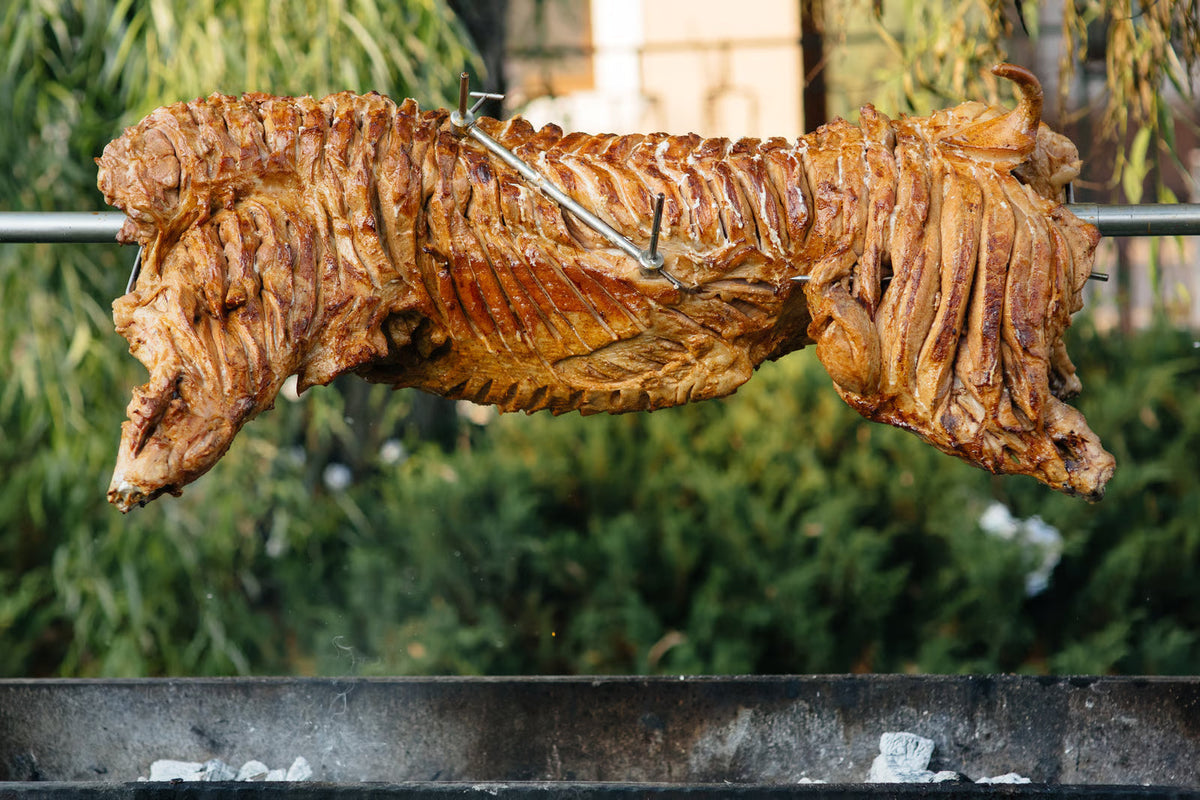
Charcoal setup, motors, whole lamb, balancing, and heat control explained simply
Rotisserie cooking has been around for centuries for one simple reason.
It works.
A slowly turning rotisserie spit cooks meat evenly, keeps it juicy, and gives you that proper charcoal flavour you just cannot get from a pan or oven. Whether you are cooking a whole lamb rotisserie, rotisserie chicken, gyros or souvla, the basics stay the same.
Controlled heat.
Balanced spit.
Patience.
This guide covers everything beginners need to know about rotisserie & spit roasting, from choosing a rotisserie BBQ setup through to charcoal management, motors, temperatures and common mistakes.
If you are just getting started with spit roasting, this page will save you a lot of trial and error.
Quick Answer: What Is Rotisserie Cooking? |
|
Rotisserie cooking is when meat slowly rotates over charcoal, wood, or gas heat using a motor-driven spit. |
|
The constant rotation helps the meat baste itself while cooking evenly from all sides. |
|
Common rotisserie foods include: |
- Whole lamb spit roast
- Rotisserie chicken
- Pork rolls
- Gyros
- Souvla
- Beef roasts
- Shawarma
- Kebabs
Most Australian backyard setups use charcoal spit roasting because the flavour is hard to beat.
If you want to start simple, a basic rotisserie kit, spit roast motor and charcoal BBQ are enough to cook incredible food.
What Is Rotisserie & Spit Roasting?
People often use the terms interchangeably.
Rotisserie cooking and spit roasting both involve rotating meat over heat using a spit.
A rotisserie spit is the metal rod that runs through the meat.
The motor slowly turns the spit while the food cooks evenly.
Some setups are small enough for chickens and roasts.
Others are large spit roasters designed for whole lamb cooking.
The biggest difference between standard grilling and spit roasting is movement.
With normal grilling, the food stays still.
With rotisserie cooking, the meat constantly rotates through the heat.
That rotation changes everything.
Rotisserie vs Standard BBQ Cooking
A lot of beginners assume rotisserie cooking is just standard BBQ cooking with a motor attached.
It is completely different.
With normal grilling, the food stays still while heat cooks one side at a time.
With rotisserie cooking, the meat constantly rotates through the heat, which changes the way it cooks completely.
That slow rotation helps the meat baste itself while fat renders gradually over the fire.
The result is usually:
- Juicier meat
- More even cooking
- Better fat rendering
- Crispier skin
- More balanced charcoal flavour
This is why rotisserie chicken stays juicy while still getting crispy skin.
It is also why whole lamb rotisserie cooking works so well over charcoal for long cooks.
Rotisserie cooking is generally better suited to:
- Whole animals
- Larger roasts
- Fatty cuts
- Slow charcoal cooking
- Entertaining larger groups
Standard grilling is usually better for:
- Steaks
- Burgers
- Thin cuts
- Fast cooking
- Direct high heat
Heat management is also very different.
With standard charcoal grilling, you often cook directly over charcoal.
With rotisserie cooking, indirect heat and charcoal placement become much more important.
If flames are constantly licking the meat, the charcoal is usually too aggressive.
Good spit roasting is more about steady glowing charcoal than massive roaring heat.
A lot of beginners overload their spits thinking bigger is better.
Most motors struggle long before the meat starts cooking properly.
Starting with smaller cooks helps you learn charcoal control, balancing, and cooking times properly before moving into whole lamb rotisserie cooking.
Once people get comfortable managing charcoal and heat properly, many end up preferring rotisserie cooking for larger cuts because the results are consistently juicy and evenly cooked.

Why Rotisserie Cooking Tastes Different
There is a reason rotisserie chicken shops always smell unreal.
The rotation helps:
- Self-baste the meat
- Cook evenly
- Reduce dry spots
- Render fat slowly
- Build a deeper crust
- Keep juices inside
Charcoal rotisserie cooking adds another layer again.
As fat drips onto hot charcoal, it creates smoke that rolls back around the meat.
That is where the real flavour comes from.
A good charcoal rotisserie setup gives you:
- Crispy skin
- Smoky flavour
- Better bark
- Juicier meat
- More even cooking
Cheap charcoal often creates thick, dirty smoke that can make rotisserie meat taste bitter. Good quality hardwood lump charcoal burns cleaner and reacts faster when adjusting heat during long cooks.
This is why so many people move from gas BBQ cooking into charcoal spit roasting once they try it properly.
Best Meats For Rotisserie Cooking
Some meats suit rotisserie cooking better than others.
The constant rotation helps fatty cuts baste themselves naturally while cooking.
Chicken
Rotisserie chicken is one of the best beginner cooks.
It is forgiving, relatively quick, and works brilliantly over charcoal.
Lamb
Lamb and charcoal are made for each other.
Whether it is a lamb leg or a whole lamb spit roast, the fat renders beautifully while the smoke builds flavour slowly during the cook.
Pork Belly & Pork Rolls
Rotisserie cooking is excellent for pork because the turning motion helps crisp the skin while keeping the inside juicy.
Beef Roasts
Beef works best with slower indirect heat.
A rotisserie helps cook larger beef cuts more evenly than standard grilling.
Gyros
Gyros are one of the best ways to cook for larger groups.
The outer layer crisps up while the inside stays juicy.
If you want to try vertical rotisserie cooking, our guide on how to use a rotisserie on your BBQ explains the setup step-by-step.
Types Of Rotisserie Cooking
There are a few different rotisserie setups beginners should understand.
Horizontal Rotisserie
This is the most common style.
The spit rotates horizontally over charcoal or gas burners.
Perfect for:
- Whole lamb rotisserie cooking
- Rotisserie chicken
- Pork rolls
- Beef roasts
Most spit roast BBQ setups in Australia use this style.
Vertical Rotisserie
Vertical rotisserie cooking stacks meat upright while it slowly rotates beside heat.
This style is used for:
- Gyros
- Shawarma
- Döner
- Al pastor
The outer layer cooks first and gets shaved off gradually.
Souvla Style Cooking
Souvla uses smaller spits with chunks of meat rotating over charcoal.
Very common in Cyprus and Greece.
Usually cooked with:
- Lamb
- Chicken
- Pork
Flat skewers and smaller charcoal BBQs are often used for this style of cooking.
If you are new to this style of cooking, our guide on how to make authentic souvla covers traditional setups, charcoal placement, and cooking techniques.

Beginner Rotisserie Setup
You do not need a massive commercial spit roaster to cook good food.
A simple beginner rotisserie setup usually includes:
- Charcoal BBQ or spit roaster — browse our range
- Rotisserie kit — shop rotisserie kits
- Spit roast motor — view motors
- Lump charcoal — shop charcoal
- Meat thermometer — view accessories
- Heat-resistant gloves — shop gloves
- Charcoal baskets
- Flat skewers for smaller meats — shop skewers
A decent beginner setup gives you enough flexibility to cook chicken, lamb legs, pork rolls and smaller spit roasts confidently.
As you cook more, you can upgrade into larger spit roasters and heavier-duty motors.
Whole Lamb Rotisserie
Cooking a whole lamb spit roast is one of the best things you can do over charcoal.
It is also one of the most rewarding.
A properly cooked lamb should have:
- Crispy outer skin
- Tender meat
- Rendered fat
- Even colour
- Light charcoal flavour
The biggest mistake beginners make is too much heat early.
A whole lamb rotisserie cook is about patience.
You want steady heat for hours, not roaring flames.
Basic Whole Lamb Setup
Most people use:
- A spit roaster — browse spit roasters
- Heavy-duty spit roast motor — view heavy-duty motors
- Charcoal or wood — shop lump charcoal
- Counterbalance
- Large charcoal trays
Lamb size matters too.
A smaller lamb cooks more evenly and is easier for beginners to handle.
If you are planning your first whole lamb cook, our beginner guide to whole lamb rotisserie cooking covers preparation, charcoal layout, and cooking timelines in detail.
|
💡 Erik's Tip |
|
For whole lamb cooking, place charcoal along both sides of the animal rather than directly underneath. This prevents flare-ups and creates far more even cooking throughout the long cook. |
Chicken Rotisserie Cooking
Rotisserie chicken is one of the best beginner cooks because it is forgiving and relatively quick.
A properly cooked chicken should have:
- Crispy golden skin
- Juicy breast meat
- Rendered skin fat
- Even cooking throughout
Tips For Better Rotisserie Chicken
- Truss the chicken properly
- Keep wings tucked in
- Balance the spit
- Use indirect heat
- Avoid massive flames
Charcoal gives the best flavour, but gas rotisserie cooking is easier for beginners learning heat control.
For more on rotisserie technique, see our full guide on how to use a rotisserie on your BBQ.
Gyros, Souvla & Vertical Rotisserie Cooking
Gyros and souvla are completely different styles of rotisserie cooking.
Gyros
Gyros are stacked layers of seasoned meat cooked vertically.
The outside crisps up while the inside keeps cooking.
Common meats include:
- Chicken
- Lamb
- Beef
The key is thin slicing and proper layering.
For a full setup guide, see our article on how to use a rotisserie on your BBQ.
Souvla
Souvla uses chunks of meat on smaller spits over charcoal. This style is huge in Cyprus.
The flavour comes from:
- Charcoal smoke
- Fat dripping onto coals
- Slow rotation
- Proper seasoning
Flat skewers help stop the meat spinning during cooking.
Charcoal Spit Roasting Basics
Good charcoal spit roasting is mostly about heat management.
Not flames.
Not huge amounts of charcoal.
Controlled heat wins every time.
Lump Charcoal vs Briquettes
Most experienced spit roasters prefer lump charcoal because it:
- Burns hotter
- Produces cleaner smoke
- Reacts faster
- Gives better flavour
Briquettes burn more evenly but produce more ash.
Briquettes are often easier for complete beginners because they burn more consistently, while lump charcoal gives better flavour and faster heat adjustment once you understand airflow.
If you are unsure what fuel to buy, our guide on the best charcoal for rotisserie cooking breaks down hardwood lump charcoal, briquettes and what works best for different cooks.
Read our guide on the benefits of lump charcoal for a full breakdown.
Two-Zone Cooking
You rarely want charcoal directly underneath the entire animal.
A better setup is charcoal along the sides.
This helps:
- Prevent flare-ups
- Reduce burning
- Cook more evenly
This is especially important for whole lamb spit roast cooking.

How To Control Heat When Spit Roasting
Heat control is the difference between good and terrible rotisserie cooking.
Too hot:
- Burnt outside
- Raw middle
- Tough meat
Too cool:
- Rubbery skin
- Poor rendering
- Dry texture over time
Real-World Heat Tips
Start Moderate
Beginners always start too hot.
Let the meat slowly warm up first.
Build Charcoal Gradually
Add charcoal in stages instead of dumping huge amounts in at once.
Watch Fat Dripping
Fat causes flare-ups.
Small flare-ups are normal. Large aggressive flames usually mean the charcoal is too close or too hot.
Use A Thermometer
A proper meat thermometer removes guesswork completely. Internal temperature matters more than cooking time.
If you are unsure about target temperatures, our guide on charcoal grilling tips and tricks explains ideal internal temps for chicken, lamb, pork and beef.
How Weather Affects Rotisserie Cooking
Weather changes the way charcoal burns.
A windy day can dramatically increase charcoal burn rate and create uneven cooking during spit roasting.
Cold weather can also slow cooking times more than beginners expect.
On windy days:
- Use more charcoal
- Expect faster fuel burn
- Watch one side cooking quicker
- Protect the fire from direct wind where possible
This is one reason experienced charcoal cooks constantly adjust charcoal during longer rotisserie cooks.
Rotisserie Motors Explained
Your spit roast motor matters more than most beginners realise.
Cheap motors struggle under heavy loads.
A quality spit roast motor should:
- Rotate consistently
- Handle weight properly
- Run quietly
- Resist heat
- Avoid jerky movement
Motor Sizes
Different motors suit different cooks.
Small Motors
Good for:
- Chickens
- Small roasts
- Gyros
Medium Motors
Good for:
- Multiple chickens
- Pork rolls
- Medium lambs
Heavy Duty Motor
Needed for:
- Whole lamb rotisserie cooking
- Large spit roasts
- Commercial setups
Browse our full range of spit roast motors to find the right fit for your setup.
How To Balance A Spit Properly
An unbalanced spit destroys motors.
It also cooks unevenly.
Balancing matters for every rotisserie setup.
Especially whole animals.
Signs Your Spit Is Unbalanced
- Motor struggling
- Jerky spinning
- One side dropping heavily
- Uneven cooking
Basic Balancing Method
- Mount the meat securely
- Let the spit rotate freely
- Identify the heavy side
- Add counterbalance weight opposite
A balanced spit rotates smoothly without fighting the motor.
For full setup details, see our guide on everything you need to know about spit roasting.
|
⚠️ Common Mistake |
|
Large cuts and whole animals should always be secured tightly before cooking starts. Checking the balance early can prevent disaster later during the cook. |
Why Meat Falls Off The Spit
This is one of the most common beginner problems.
Usually it happens because:
- Forks are not tightened properly
- The meat softens as fat renders
- The spit is overloaded
- Round skewers allow spinning
- The meat was not secured evenly
Large cuts and whole animals should always be secured tightly before cooking starts.
Checking the balance early can prevent disaster later during the cook.

Best Charcoal For Rotisserie Cooking
Not all charcoal is equal.
Cheap charcoal creates:
- Excess ash
- Dirty smoke
- Inconsistent heat
- Short burn times
Good lump charcoal burns cleaner and gives better flavour.
What To Look For
- Dense hardwood lump charcoal
- Larger chunks
- Low sparking
- Consistent burn
Avoid heavily processed charcoal with fillers.
For longer cooks like whole lamb spit roast cooking, quality charcoal makes a massive difference. Read our guide on the benefits of using lump charcoal for a full breakdown.
Basic Rotisserie Cooking Times
These cooking times are general starting points only.
Actual cooking times vary depending on charcoal heat, weather, meat size, and spit height.
|
Food |
Approx Cooking Time |
Internal Temp |
|
Whole Chicken |
1.5 to 2 hours |
74°C |
|
Lamb Leg |
2 to 4 hours |
90°C for pull-apart |
|
Pork Roll |
3 to 5 hours |
88 to 93°C |
|
Whole Lamb |
5 to 8+ hours |
Judged by tenderness and probe feel |
|
Gyros |
Depends on stack size |
Slice as outer layer cooks |
A meat thermometer is always more reliable than cooking by time alone.
Essential Rotisserie Accessories
The right accessories make rotisserie cooking easier and safer.
Useful Rotisserie Accessories
Rotisserie Skewers
Perfect for souvla, kebabs and smaller cuts. Flat skewers help prevent spinning.
Meat Thermometers
One of the most important tools you can own. Browse our BBQ accessories for thermometer options.
Counterbalance Kits
Essential for larger spit roasts.
Charcoal Baskets
Help control airflow and heat zones.
Drip Trays
Reduce flare-ups and make cleanup easier.
Heat Resistant Gloves
You will use these constantly. Browse our full range of rotisserie accessories.
Common Beginner Mistakes
Almost everyone makes these mistakes at first.
Too Much Heat
The number one problem.
Rotisserie cooking is slower than grilling.
Poor Spit Balancing
This destroys motors and causes uneven cooking.
Using Cheap Charcoal
Bad charcoal creates bad flavour.
Simple.
Constantly Poking The Meat
Constantly piercing or cutting meat unnecessarily can dry the surface out over time.
Use a thermometer instead.
Cooking Directly Over Flames
You want glowing charcoal.
Not raging fire.
Not Securing The Meat Properly
Loose meat shifts during cooking and throws the balance off completely.
Best Rotisserie BBQ Setups
The best rotisserie BBQ depends on what you cook most.
For Beginners
A charcoal BBQ with a rotisserie kit is a great starting point.
Good for:
- Chicken
- Pork
- Small roasts
For Families & Entertaining
A dedicated spit roast BBQ setup gives you:
- More cooking space
- Better charcoal management
- Larger motor capacity
For Whole Lamb Cooking
You want:
- Heavy-duty spit roaster
- Adjustable height
- Strong motor
- Large charcoal capacity
For Gyros & Souvla
Smaller charcoal rotisserie setups with flat skewers work brilliantly.
Browse our full range of spit roasters and rotisserie BBQs to compare different setups.
Related Guides To Read Next
If you want to learn more about spit roasting, these guides will help:
→ How To Use a Rotisserie on Your BBQ
→ The Ultimate Lamb Spit BBQ Guide
→ How To Make Authentic Souvla on a Cyprus BBQ
→ Discover the Cyprus BBQ: A Traditional Rotisserie Grill
→ The Benefits of Using Lump Charcoal for Grilling
→ Everything You Need To Know About Spit Roasting
→ Charcoal Grilling Tips and Tricks
You can also browse our range of:
- Spit roasters
- Rotisserie kits
- Spit roast motors
- Flat skewers
- Charcoal BBQs
- Lump charcoal
- Meat thermometers
- Rotisserie accessories
Frequently Asked Questions
|
What is the difference between a rotisserie and a spit roast? They are very similar. A rotisserie refers to the rotating cooking system itself, while spit roast usually refers to cooking larger meats or whole animals over fire. |
|
Is charcoal or gas better for rotisserie cooking? Charcoal gives better flavour. Gas is easier to control. Most experienced spit roasters prefer charcoal once they learn fire management properly. |
|
How long does a whole lamb take on a rotisserie? It depends on lamb size, heat, and weather conditions. Low and steady cooking always gives better results than rushing. |
|
Do I need a motor for a rotisserie? Yes. The motor keeps the spit rotating evenly throughout the cook. Heavy meats need stronger motors. Browse our spit roast motors to find the right fit. |
|
Why is my rotisserie chicken dry? Usually too much heat, overcooking, poor balancing, or cooking directly over flames rather than glowing embers. |
|
What charcoal is best for spit roasting? Quality hardwood lump charcoal is usually best for flavour and heat consistency. |
|
How do I stop meat spinning on skewers? Use flat skewers instead of round ones. They grip the meat properly during rotation. |
|
Can I cook gyros on a charcoal rotisserie? Absolutely. Charcoal adds excellent flavour to gyros and vertical rotisserie cooking. |
Ready To Start Rotisserie Cooking?
Whether you want to cook rotisserie chicken, souvla or a full whole lamb spit roast, getting the basics right makes a massive difference.
Start simple.
Learn heat control.
Use good charcoal.
Balance your spit properly.
The rest comes with practice.
Browse our range of spit roasters, rotisserie kits, charcoal BBQs, lump charcoal and rotisserie accessories at Sydney BBQs & Rotisseries.