
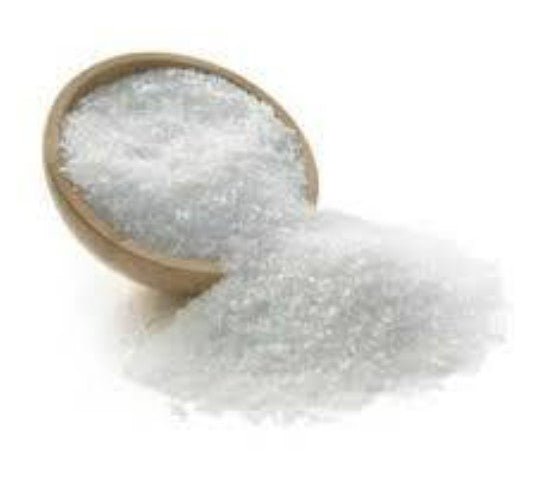
Kosher salt is a coarse cooking salt with larger crystals than the fine table salt most Australians grew up using.
Chemically, there’s nothing particularly special about it. It’s still mainly sodium chloride. What makes kosher salt useful is the size and shape of the crystals.
The larger crystals are easier to pick up with your fingers, easier to spread evenly over food and much easier to see once they land. That makes a big difference when you’re seasoning a steak, a whole chicken or a 6kg brisket.
If you’ve been watching American BBQ videos or following American recipes, you’ve probably seen kosher salt mentioned constantly. Here in Australia it hasn't traditionally been as common in supermarkets, which is why we regularly get people asking what kosher salt actually is and what they should use instead.
Quick Answer
Kosher salt is a coarse cooking salt with larger crystals than regular table salt. The larger crystals make it easier to pick up, see and spread evenly over meat, which is one of the main reasons it's so commonly used in American BBQ recipes.
In This Guide
- Why is it called kosher salt?
- What is kosher salt in Australia?
- Why do American BBQ recipes use kosher salt?
- Kosher salt vs table salt
- Kosher salt vs sea salt
- Diamond Crystal vs Morton
- Can you substitute other salts?
- Why you should measure salt by weight
- Using kosher salt for BBQ
- Where to buy kosher salt in Australia
- Kosher salt FAQs
Why Is It Called Kosher Salt?
The name causes a fair bit of confusion.
Kosher salt isn't called kosher salt because it's necessarily more "kosher" than other salt. The name comes from its traditional use in koshering meat – the process of drawing blood from meat in accordance with Jewish dietary practices.
Its larger crystals made it well suited to coating the surface of meat and drawing out moisture.
Over time, particularly in the United States, kosher salt became popular as an everyday cooking salt. American chefs and home cooks started using it for everything from seasoning meat to salting pasta water.
That’s why it now appears in so many American recipes.
What Is Kosher Salt in Australia?
There isn't really a special Australian equivalent with a different name.
If an American recipe calls for kosher salt, it is asking for a coarse cooking salt with a crystal structure similar to the kosher salt commonly sold in the US.
This is where Australians sometimes get caught out.
You might see a recipe calling for Diamond Crystal kosher salt and assume you need to find that exact American product. Usually, you don't.
You can use a kosher salt available here in Australia. The important thing is understanding that different salts – and even different brands of kosher salt – don't necessarily measure the same by volume.
One tablespoon of one salt can contain a different actual weight of salt to one tablespoon of another.
Why Do American BBQ Recipes Use Kosher Salt So Much?
For BBQ, kosher salt makes a lot of sense.
Imagine seasoning a full packer brisket.
With very fine table salt, the crystals disappear almost immediately against the meat. It's harder to see where you've already seasoned and very easy to put too much in one area.
Kosher salt gives you more control.
- Easier to pick up and season by hand
- Easier to see where the salt has landed
- Easier to distribute across a large piece of meat
- Easier to build an even layer of seasoning
- Useful when making simple salt-and-pepper BBQ rubs
None of this means kosher salt somehow tastes dramatically better than ordinary salt.
The advantage is mostly how you can handle and distribute it.
When you're seasoning a couple of steaks, the difference might not seem enormous. When you're trying to evenly season several kilograms of brisket, beef ribs or lamb, it becomes much more obvious.
For more seasoning options, you can also browse the BBQ rubs and seasonings collection at Sydney BBQs.
Kosher Salt vs Table Salt
Kosher salt and table salt are both predominantly sodium chloride, but physically they're quite different.
| Kosher Salt | Table Salt | Sea Salt | |
|---|---|---|---|
| Crystal size | Generally larger/coarser | Very fine | Varies from fine to very coarse |
| Easy to season meat by hand | Yes | Less so | Depends on crystal size |
| Easy to see on meat | Yes | Less visible | Depends on crystal size |
| Density by volume | Varies by brand | Generally more compact | Varies considerably |
| Best BBQ use | General seasoning, dry brining and rubs | Accurate weighed recipes and brines | Depends heavily on grain size |
The biggest practical difference is density.
Fine table salt packs quite tightly into a teaspoon. Larger kosher salt crystals leave more air between the crystals.
So a tablespoon of table salt can contain considerably more salt by weight than a tablespoon of a lighter, flakier kosher salt.
Morton itself publishes a salt conversion chart because its coarse kosher salt and table salt aren't directly interchangeable at larger volume measurements.
Kosher Salt vs Sea Salt
This comparison is slightly misleading because the two names describe different things.
Sea salt tells you where the salt came from.
Kosher salt generally tells you more about the style and crystal structure of the salt.
Sea salt is produced from seawater, but it can be sold as very fine crystals, coarse crystals or large finishing flakes. Kosher salt can also have different crystal structures depending on the manufacturer.
So you can't really say that all sea salt is finer or coarser than kosher salt.
A coarse sea salt can sometimes work perfectly well in place of kosher salt for seasoning meat. Morton even lists coarse sea salt as an appropriate substitute for kosher salt in rubs.
Again, the important question is how big are the crystals and how much does the salt actually weigh?
For BBQ, I care far more about those things than whether "sea salt" or "kosher salt" is printed on the front.
Diamond Crystal vs Morton Kosher Salt
If you've spent enough time reading American recipes, you'll eventually run into Diamond Crystal and Morton.
They're two well-known American kosher salts, but they're not identical.
Diamond Crystal is known for its relatively light, flaky crystal structure. Morton Coarse Kosher Salt has a different crystal structure and density.
That matters when a recipe measures salt with spoons or cups.
If a recipe was developed using Diamond Crystal and you fill the same tablespoon with a denser salt, you can end up adding considerably more salt by weight.
This isn't because one brand is somehow chemically "saltier". You're simply fitting a different mass of salt into the same spoon.
This is also why Australians don't necessarily need to track down Diamond Crystal just because an American recipe writer uses it.
Use an appropriate kosher salt available here and adjust for the salt you're actually using. Better still, if the amount matters, use a scale.
Can You Substitute Table Salt or Sea Salt for Kosher Salt?
Yes.
But don't automatically substitute it 1:1 by volume.
Substituting Table Salt
Table salt is much finer and generally packs more tightly into a spoon.
So if an American recipe calls for a tablespoon of kosher salt, don't assume a tablespoon of table salt is equivalent. You may end up substantially oversalting the food.
Substituting Sea Salt
It depends entirely on the sea salt.
A coarse sea salt may behave quite similarly to kosher salt when you're seasoning meat. A fine sea salt may behave more like table salt.
Look at the actual crystal size rather than relying purely on the name on the packet.
Why You Should Measure Salt by Weight
This is one of those things that sounds overly technical until you've ruined an expensive piece of meat.
A gram measures weight.
Different salt crystals pack into that tablespoon differently.
If a recipe tells you to use 20 grams of salt, there's no ambiguity. You use 20 grams.
If it tells you to use two tablespoons of kosher salt, the brand and crystal size can affect how much salt you're actually adding.
For casual seasoning, I'm not pulling out scales every time I cook a steak.
But when salt quantity is important, weighing it is the safer way to do it.
🔥 Erik's Tip
When I'm seasoning something big like a brisket, I like kosher salt because I can actually see what I'm doing. I can see where it's landing and where I've already seasoned. Fine table salt disappears pretty quickly and it's easy to hammer one spot without realising it.
The other thing I'd tell anyone following an American recipe is don't blindly copy tablespoons if you're using a different salt. If the amount actually matters, weigh it. Grams don't care what shape the salt crystal is.
Using Kosher Salt for BBQ
Kosher salt is particularly handy around a BBQ because we're often seasoning larger pieces of meat.
- Brisket
- Beef ribs
- Steaks
- Lamb shoulders
- Whole chickens
- Large roasts
You can grab a pinch and distribute it from a reasonable height, which helps spread the salt across a wider area rather than dumping it into one concentrated patch.
It also works well in BBQ rubs. If you're making something simple like a salt-and-pepper brisket rub, the physical size of the salt matters because it affects how the rub mixes and distributes.
For beef-focused cooks, Sydney BBQs also stocks a dedicated range of beef, steak and brisket rubs.
There's no universal rule saying kosher salt is mandatory for BBQ. It isn't.
It's simply a very practical salt to work with.
Kosher Salt for Brisket
Brisket is probably one of the best examples of why kosher salt became so popular in American BBQ.
You've got a big surface area to season and you want reasonably consistent coverage.
With kosher salt, you can see the crystals sitting on the meat as you work your way across the flat, point and sides. That gives you much better visual feedback than fine salt.
It's also useful if you're dry brining your brisket.
Dry brining simply means salting the meat ahead of cooking and allowing time for the salt to do its work. Moisture initially comes to the surface, dissolves the salt and the resulting salty liquid can then move back into the meat over time.
Rather than copying an arbitrary number of tablespoons from a recipe using an unknown salt, weighing your salt gives you a repeatable result.
If you liked the amount you used on your last brisket, write down the weight. Next time you can actually reproduce it.
Kosher Salt for Steak
I also like coarse salt for steak because it's easy to control by hand.
You can physically see the coverage you're getting.
That doesn't mean you need to completely coat a steak until it's white. Salt it according to the thickness and size of the meat and how you like to cook.
If you're salting ahead of time, kosher salt also works well for dry brining steaks in the fridge.
Again, consistency is the useful part. Once you know roughly how much salt works for a particular size steak, you can repeat it instead of guessing from scratch every time.
Where to Buy Kosher Salt in Australia
Kosher salt is much easier to find in Australia than it used to be, particularly through BBQ stores and specialist food retailers.
You may occasionally find imported Diamond Crystal or Morton kosher salt, but you don't need an imported American brand simply because an American YouTube video or recipe mentions one.
We stock Misty Gully Kosher Salt at Sydney BBQs & Rotisseries for exactly this reason. If you're following American BBQ recipes that call for kosher salt, you don't need to go hunting around for an imported American brand.
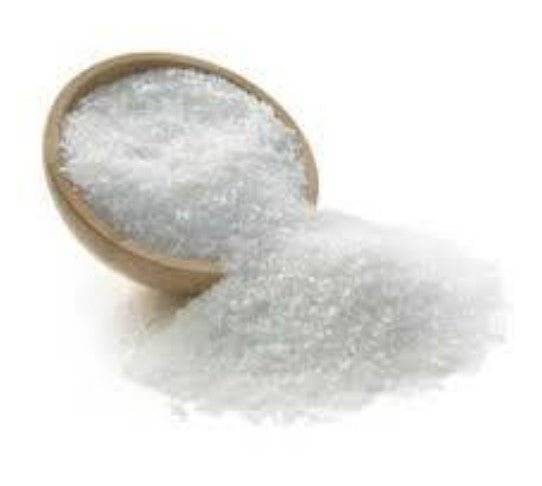
Misty Gully Kosher Salt
The kosher salt we stock for brisket, steaks, dry brining, BBQ rubs and general cooking.
View Kosher Salt →Kosher Salt FAQ
Is kosher salt the same as normal salt?
Chemically they're both predominantly sodium chloride. The main practical difference is the crystal size and structure. Kosher salt generally has larger crystals than ordinary fine table salt, which makes it easier to handle and distribute over food.
Is kosher salt healthier than table salt?
Don't assume it is. Kosher salt can contain less sodium per teaspoon than a denser table salt because less actual salt may fit into the spoon, but that doesn't make sodium chloride itself healthier.
Does kosher salt contain iodine?
Many kosher salts are not iodised, while table salt is commonly available with iodine added. Check the label of the particular salt you're buying rather than assuming.
Can I use kosher salt for dry brining?
Yes. It's very well suited to dry brining meat because it's easy to distribute evenly across the surface. For repeatable results, especially with large cuts, measure the amount of salt by weight rather than relying purely on tablespoons.
Do I need Diamond Crystal kosher salt for American recipes?
No. Diamond Crystal is common in American recipes because many American cooks use it, but you don't need that particular brand to cook the recipe in Australia.
Use an appropriate kosher salt available here. If the recipe gives the quantity in grams, substitution is straightforward. If it gives tablespoons or teaspoons, remember that different brands and crystal sizes can have different weights for the same volume.