
In Summary
- Regular cleaning is what keeps a BBQ cooking well and lasting for years: a quick clean after every cook, plus a deeper clean every month or so.
- The right method depends on the material. Stainless steel, cast iron and enamel each need different care, and the wrong approach can wreck the finish.
- Match your cleaning to the part. Grates, firebox, chimney, lid and thermometer all need attention, and knowing what to avoid matters as much as knowing what to do.
A good BBQ is an investment, and like any tool that lives outdoors and cops high heat, grease and weather, it rewards a bit of care with years of extra life. The good news is that maintenance is neither hard nor time-consuming once you know what you are doing. This guide walks through how to clean every part of your BBQ, how to look after the three main grate materials, and how often to do it, so your grill cooks better, stays safer and lasts far longer.
Why BBQ Maintenance Matters
It is easy to treat cleaning as a chore, but it pays off in four ways. Performance: a clean grill heats evenly and avoids the grease flare-ups that scorch your food. Hygiene: old carbon and fat are not something you want anywhere near tonight’s dinner. Longevity: rust and build-up are what kill a BBQ before its time, and both are preventable. And cost: a well-kept grill lasts many years, while a neglected one needs replacing far sooner. Ten minutes of upkeep is cheap insurance.
Know Your Material: Stainless vs Cast Iron vs Enamel
Before you clean anything, know what you are cleaning, because the three common grate materials each want different handling.
- Stainless steel: Tough and rust-resistant, but not bulletproof. It can discolour with heat and will corrode if you scratch it up or use the wrong cleaner. Clean it with a stainless-safe brush or nylon pad, work with the grain, and steer clear of steel wool and harsh chloride-based cleaners, which leave it prone to rust.
- Cast iron: The king of heat retention and searing, but it needs seasoning and a film of oil to stay rust-free. Never soak it or scrub it with detergent, as that strips the seasoning. Scrape, wipe, and re-oil after every clean.
- Enamel (porcelain coated): Easy to wipe down and naturally slick, but the coating is glassy and brittle. It chips if you hit it with metal tools and can crack if shocked with cold water while hot. Soft brushes and gentle heat changes are the rule here.
Cleaning the Grates
Grates do the hard work, so they need the most frequent attention. After each cook, the simplest method is to run the BBQ hot for a few minutes to burn off residue, then brush the grates while they are still warm and give them a wipe. For a deeper clean, stainless and enamel grates can be washed in warm, soapy water, while cast iron should be scraped, rinsed briefly, dried thoroughly and re-oiled straight away to protect it. Whatever the material, do not let food and grease bake on over multiple cooks, because the longer it sits, the harder it is to shift.
For cleaning tools and BBQ-safe cleaning products, see the BBQ Cleaning Accessories collection.
Cleaning the Firebox and Burners
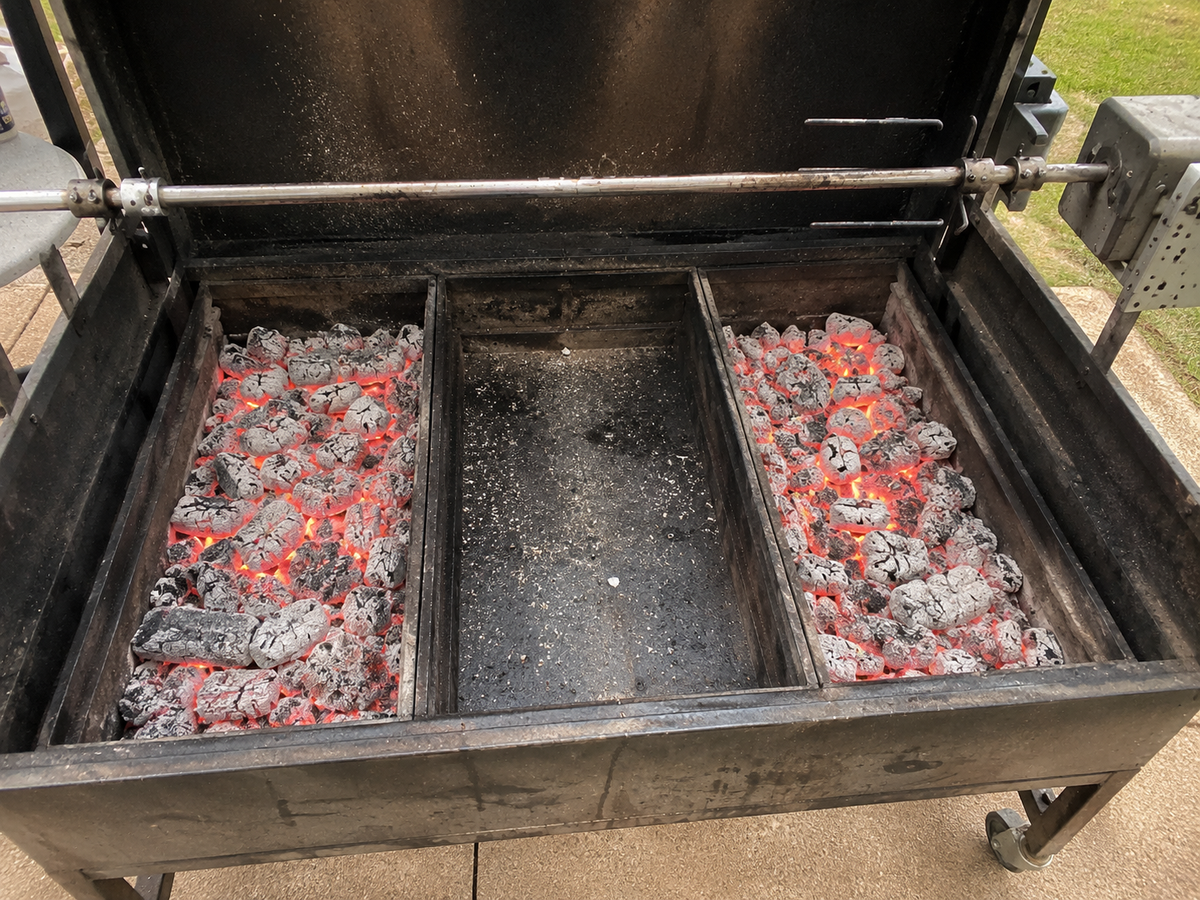
The firebox is where grease and ash collect, and both cause problems if ignored. On a charcoal BBQ, empty the ash after every cook once it is cool, because ash holds moisture against the metal and is a leading cause of rust. On a gas BBQ, check the burner ports are clear, since blocked ports cause uneven flames, and look out for insects nesting in the burner tubes, which is more common than people think. Clean grease from the base and empty the drip tray regularly, so it cannot build up into a fire hazard.
If you are looking for a new charcoal BBQ or gas BBQ, explore the Syd BBQs collections.
Cleaning the Lid and Interior
That flaky black material on the inside of your lid is not peeling paint, it is carbonised grease and smoke, and it is worth removing before it drops onto your food. Scrape it gently with a plastic or wooden scraper, then wipe the interior with warm, soapy water. Avoid harsh oven cleaners inside the lid, as they can damage finishes and leave residues you do not want near food. A quick wipe every few cooks stops it building up in the first place.
Looking After the Chimney and Vents
Airflow is how you control temperature, so vents and chimneys need to stay clear. Ash and grease slowly clog the intake and exhaust vents on kettles and smokers, which makes your BBQ harder to control and slower to reach temperature. Brush them out regularly, and clear any build-up in the chimney or flue so smoke and heat move freely. On a charcoal BBQ especially, clean vents are the difference between easy temperature control and a constant fight.
For charcoal cooking equipment, see the charcoal BBQ grills and rotisseries collection.
Caring for the Thermometer
The lid thermometer is easy to forget until it starts lying to you. Never submerge or soak a lid-mounted thermometer, as water gets behind the dial and fogs or ruins it. Just wipe the lens so you can read it clearly. It is also worth checking its accuracy now and then: a probe in iced water should read 0°C, and in boiling water 100°C. If it is well out and cannot be adjusted, replace it, because guessing your temperature is a fast way to ruin a long cook.
For temperature monitoring equipment, see the BBQ thermometers collection.
Your Cleaning Schedule: After Each Cook vs Monthly
You do not need to do everything every time. Split your maintenance into a light routine and a deeper one.
After every cook:
- Burn off and brush the grates while they are warm
- Empty the ash (charcoal) or check the grease tray (gas)
- Wipe down surfaces, and the lid interior if needed
- Close the vents once cool to keep moisture out (charcoal)
Every month or few cooks:
- Deep clean the grates and re-oil cast iron
- Clean out the firebox, burners and drip tray
- Clear the vents and chimney of build-up
- Check the thermometer and inspect for rust
- Wipe down the exterior and check gas fittings
What to Avoid So Your Finish Lasts
Half of good maintenance is simply not doing the things that cause damage. Keep this short list in mind:
- Cold water on a hot BBQ: thermal shock can warp metal and crack enamel, so let it cool first.
- Steel wool and harsh abrasives: they scratch stainless and chip enamel, which leads to rust and damage.
- Bristle-shedding wire brushes: loose bristles can end up in food, so bristle-free or coil brushes are safer.
- Leaving ash in the base: it traps moisture and rusts the firebox from the inside out.
- Soaking or stripping cast iron: it removes the seasoning that keeps the metal protected.
- Putting it away wet: dry everything first, and give cast iron a light coat of oil.
- Skipping the cover: protecting it from the weather does more for longevity than almost anything else.
A Quick Maintenance Checklist
- Grates brushed and, if cast iron, re-oiled?
- Ash emptied or grease tray checked?
- Firebox and burners clear?
- Vents and chimney free of build-up?
- Lid interior scraped and wiped?
- Thermometer clean and reading true?
- Everything dry before it goes away?
- Cover on for storage?
A Last Word
Looking after your BBQ is not complicated: a quick clean after each cook, a deeper one each month, the right method for your material, and a short list of things to avoid. Do that, and your grill will heat evenly, cook safely and stay looking good for many seasons to come. Browse our range of BBQ cleaning tools and accessories to make the job even easier.
Glossary
- Seasoning: The baked-on layer of oil that protects cast iron from rust and gives it a natural non-stick surface.
- Porcelain enamel: A glassy coating fused onto metal grates for easy cleaning, prone to chipping if struck or thermally shocked.
- Heat tint: The discolouration stainless steel develops from high heat, usually cosmetic rather than harmful.
- Thermal shock: The stress caused by a sudden temperature change, such as cold water on hot metal, which can warp or crack surfaces.
- Flare-up: A burst of flame caused by fat or grease igniting, reduced by keeping the grates and firebox clean.