
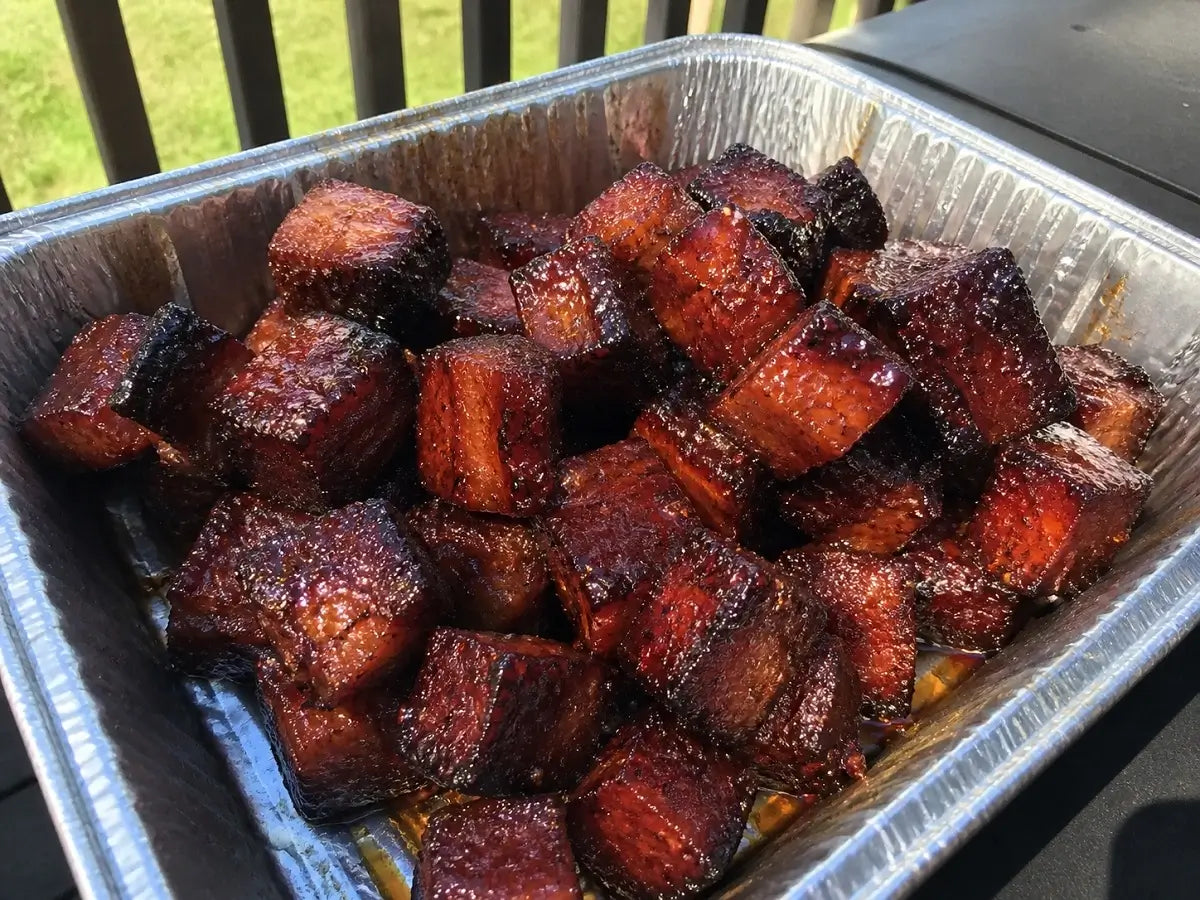
If you’ve never cooked pork belly burnt ends, you’re missing one of the best things you can pull off a smoker.
They’re rich, sticky, smoky and just the right amount of sweet — especially when you bring maple and cherry into the mix. This version leans into that classic sweet-smoky balance, with a proper bark and a soft, rendered centre.
We’ll walk through everything step-by-step, including how to prep pork belly properly, why trimming matters, and how to avoid the common mistakes that turn these into chewy cubes instead of melt-in-your-mouth bites.
We’ll also show where a solid rub like the Misty Gully Rib Rub fits naturally into the cook without overcomplicating things.
What Are Pork Belly Burnt Ends?
Pork belly burnt ends are made by cubing pork belly, smoking it at 120°C (250°F) until tender, then glazing and finishing at 135–150°C (275–300°F) until sticky and caramelised.
Originally, burnt ends came from brisket point. These days, pork belly is a favourite because:
- It cooks faster
- It’s more forgiving
- It delivers consistent results
- You get a rich, buttery texture when done right
Think of them as bite-sized BBQ cubes with a sticky glaze and proper bark.
Why Maple and Cherry Work So Well
This flavour combo works because:
- Maple brings a deep, rounded sweetness
- Cherry adds a mild fruit note without overpowering
- Both pair perfectly with pork fat
You end up with a glaze that’s sweet but balanced, not sugary or one-dimensional.
Ingredients
- 1.5–2 kg pork belly (skin on or off)
- 2–3 tbsp Misty Gully Rib Rub
- 80 ml maple syrup
- 60 ml cherry juice or cherry syrup
- 50 g brown sugar
- 50 g butter
- 2 tbsp BBQ sauce (optional, for extra glaze)
- 1 tbsp apple cider vinegar (optional, for balance)
Equipment
- Smoker or BBQ set up for indirect cooking
- Charcoal or pellets (fruit wood like cherry or apple works best)
- Drip tray or foil tray
- Sharp knife
- Tongs
Preparing the Pork Belly (Important Step)
Should You Remove the Skin?
If your pork belly has skin on, you need to remove it before cooking.
Why remove the skin?
- The skin won’t render properly at low BBQ temperatures
- It blocks smoke and seasoning from penetrating the meat
- It becomes tough and chewy rather than crispy
What happens if you leave it on?
You’ll end up with rubbery skin and uneven cooking. The cubes won’t absorb flavour properly.
What to do with the skin instead
Don’t throw it out:
- Roast it separately at 220°C (430°F) for crackling
- Cut into strips and fry for pork scratchings
- Use it to flavour stocks or beans
Trimming tips
- Remove excess hard fat if present
- Leave soft fat — it renders and adds flavour
- Cut into even 3–4 cm cubes for consistent cooking
Method
Step 1: Season the Pork
- Pat the pork belly dry
- Coat evenly with Misty Gully Rib Rub
- Let it sit for 20–30 minutes while the BBQ heats up
This rub works well here because the subtle sweetness and spice help build a proper bark without overpowering the maple and cherry later.
Step 2: First Smoke
- Set BBQ to 120°C (250°F)
- Place pork belly cubes on the grill (not in a tray yet)
- Smoke for 2.5 to 3 hours
You’re looking for:
- Good colour
- Bark starting to form
- Fat beginning to render
Step 3: Tray and Glaze
Once the cubes have colour:
- Transfer to a foil tray
- Add:
- Maple syrup
- Cherry juice
- Butter
- Brown sugar
Mix gently to coat.
Cover loosely with foil.
Step 4: Braise Phase
- Increase BBQ to 135°C (275°F)
- Cook covered for 1.5 to 2 hours
This stage softens the pork and renders the fat.
Step 5: Final Set
- Remove foil
- Optional: add BBQ sauce for extra stickiness
- Return to BBQ uncovered
- Cook for another 30–45 minutes
You want:
- Thick, sticky glaze
- Slight caramelisation
- Soft but not falling apart texture
Cooking Time & Temperature
- First smoke: 120°C (250°F) — 2.5 to 3 hours
- Braise: 135°C (275°F) — 1.5 to 2 hours
- Finish: 135–150°C (275–300°F) — 30–45 minutes
Total time: 4.5 to 6 hours
Tips for Best Results
- Keep cube sizes even for consistent cooking
- Don’t rush the first smoke — that’s where flavour builds
- Use fruit wood like cherry or apple for a lighter smoke
- Stir gently during the braise to avoid breaking cubes
- Let them rest for 10–15 minutes before serving
Common Mistakes
Cutting uneven cubes
Leads to some overcooked and some undercooked pieces.
Skipping the bark stage
If you tray too early, you’ll miss out on texture.
Too much sugar too early
This can burn. Always glaze after the initial smoke.
Not rendering enough fat
If they’re chewy, they needed more time in the covered stage.
What to Serve It With
- Soft rolls for sliders
- Coleslaw for contrast
- Pickles to cut through the richness
- Simple potato salad
Storage & Reheating
- Store in fridge for up to 3 days
- Reheat at 150°C (300°F) covered
- Add a splash of liquid (juice or stock) to keep them moist
Products Used or Recommended
-
Misty Gully Rib Rub
Works well here because it builds a balanced bark with a mild sweetness that complements the maple and cherry glaze.
Suggested anchor text: Misty Gully Rib Rub
FAQs
Can I use pork belly slices instead of a whole piece?
Yes, but thickness matters. Aim for pieces that can still be cut into cubes. Thin strips won’t work as well.
Do I need a smoker for this recipe?
No. Any BBQ that can hold steady indirect heat at 120°C (250°F) will work.
Can I make these less sweet?
Reduce the maple syrup and brown sugar, and add a bit more vinegar for balance.
How do I know when they’re done?
They should be soft when pressed, with a sticky glaze and rendered fat. Not tough or chewy.
Can I freeze pork belly burnt ends?
Yes, but texture is best fresh. Freeze in sauce and reheat slowly.
What wood is best for this recipe?
Cherry or apple wood works best. They complement the glaze without overpowering it.
Why are my burnt ends dry?
Likely overcooked or not enough fat rendering during the braise stage.
These maple cherry pork belly burnt ends are one of those cooks that always get attention when they hit the table.
They’re simple once you understand the stages, and they’re hard to get wrong if you take your time with the render and glaze.
Fire up the BBQ, grab your pork belly and give this one a crack this weekend.