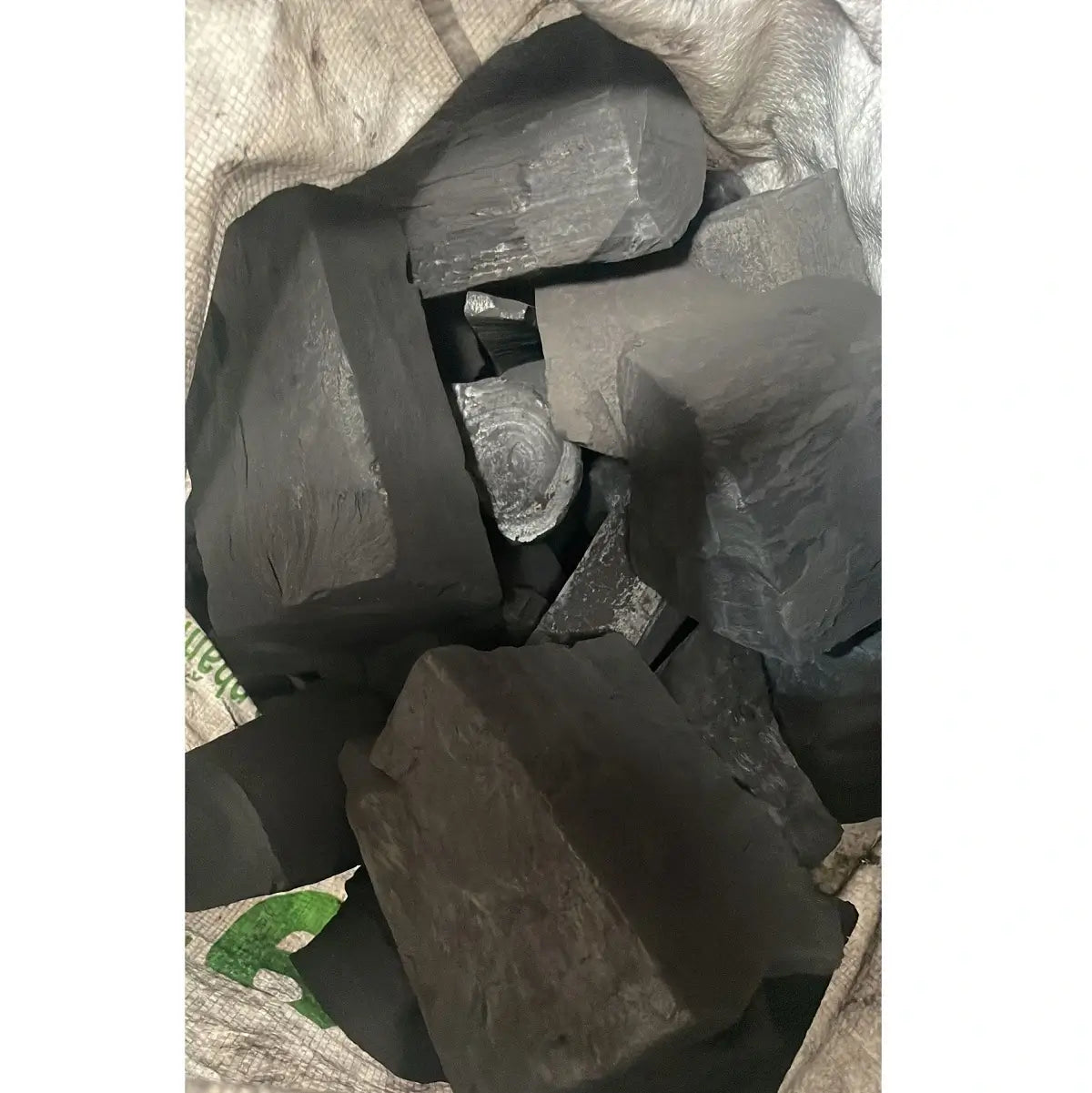
This premium large lump hardwood charcoal is made for BBQs that need strong, steady radiant heat.
It is best suited to deep charcoal trays, Cyprus BBQs, parrillas, rotisserie setups, offset smokers, restaurant grills, open charcoal pits and larger charcoal cooking systems where airflow and fuel depth matter.
The oversized lump size gives you a longer, cleaner and more stable burn compared to small broken charcoal pieces. That makes it a strong choice for long cooks, bigger meats and wide cooking areas where you do not want to keep topping up the fire every 20 minutes.
This is not the charcoal we would recommend first for a shallow mangal or tiny compact grill.
It is made for cooks who want control, burn time and proper radiant heat.
Why Charcoal Size Matters
Not all lump charcoal cooks the same.
The size of the charcoal affects:
- How fast it lights
- How much airflow moves through the coal bed
- How long it burns
- How steady the heat feels
- How often you need to refuel
- How close the heat sits to the food
- How easy it is to control the fire
Large lump charcoal leaves more space between pieces. That allows air to move through the fuel bed more freely, especially in deeper BBQs. Better airflow means cleaner combustion, steadier heat and less smothering.
Small lump charcoal lights faster because there is more surface area exposed to flame. It can be great for quick skewers, small grills and fast weeknight cooking, but it can also burn down faster and restrict airflow if the pieces pack together too tightly.
Large Lump vs Small Lump Charcoal
| Charcoal Size |
Best For |
Main Benefit |
Watch Out For |
| Large lump charcoal |
Rotisserie, parrilla, souvla, offset smokers, deep BBQs, low and slow |
Longer burn, better airflow, strong radiant heat |
Too large for shallow BBQs |
| Medium lump charcoal |
Everyday grilling, steaks, chicken, skewers, kettles |
Good balance of lighting speed and burn time |
May need topping up on long cooks |
| Small lump charcoal |
Quick cooks, shallow mangals, yakitori-style grilling, fast direct heat |
Lights quickly and gets hot fast |
Burns faster and can block airflow |
| Mixed-size charcoal |
General BBQ use |
Versatile for most cooks |
Quality depends on dust and fines level |
Burn Characteristics
This charcoal is designed to burn with steady, dry heat.
Expect:
- Strong radiant heat
- Long burn time in deeper charcoal beds
- Low smoke once fully lit
- Low ash compared to poor-quality fuel
- Good airflow between large pieces
- Stable heat across wide cooking surfaces
- Moderate lighting time due to the larger lump size
- Low spark level when lit properly and kept dry
Because the pieces are large, they take a little longer to fully catch compared to small lump charcoal. Give it time. Do not start cooking while the outside is still black and smoking heavily.
Once properly lit, the charcoal settles into a cleaner burn with a steady heat bed.
Flavour Profile
This charcoal gives a clean hardwood BBQ flavour.
It is not designed to overpower the food with heavy smoke. That makes it useful when you want the flavour of the meat, marinade, fat, salt and seasoning to stay upfront.
The smoke profile is:
- Clean
- Mild to medium
- Wood-fired without being harsh
- Better suited to lamb, chicken, beef, kofta, shish, steaks and rotisserie meats
- Good for cooks where charcoal flavour matters but heavy smoke does not
For stronger smoke flavour, add wood chunks separately.
Use charcoal for heat.
Use wood chunks for flavour.
That gives you much better control.
Best BBQ Types
This charcoal is best used in BBQs with enough charcoal depth and airflow underneath the fuel bed.
Best suited to:
- Cyprus BBQs
- Souvla BBQs
- Large rotisserie BBQs
- Parrillas
- Argentine grills
- Restaurant charcoal grills
- Open charcoal pits
- Offset smokers
- Drum smokers
- Large kettles
- Kamado-style cookers
- Charcoal trays with good depth
- Pizza ovens that allow lump charcoal use
Less suited to:
- Very shallow mangals
- Small portable charcoal grills
- Tiny kettle BBQs
- Yakitori grills with narrow fuel channels
- BBQs where food sits very close to the charcoal
In shallow BBQs, oversized lump charcoal can reduce cooking space, push heat too close to the food and make temperature control harder.
Best Foods To Cook With It
This charcoal is ideal for foods that benefit from steady radiant heat.
Best for:
- Whole chickens on a rotisserie
- Lamb shoulder
- Lamb ribs
- Souvla
- Shish kebabs
- Kofta and kofte
- Steaks
- Ribeye and tomahawk steaks
- Chicken thighs
- Charcoal chicken
- Butterflied lamb
- Brisket in offset smokers
- Pork-free sausage cooks
- Vegetables over open charcoal
- Pizza oven heat management
- High-volume catering cooks
It also works well for non-BBQ cooking where strong charcoal heat is needed, such as outdoor camp ovens, open-fire cooking frames and charcoal cooking stations.
Who This Charcoal Is Best For
This charcoal is best for:
- Rotisserie cooks
- Parrilla users
- People cooking lamb, chicken and beef over charcoal
- BBQ restaurants and caterers
- Customers using deep charcoal trays
- Offset smoker users
- People who hate constant refuelling
- Experienced BBQ cooks who understand airflow
- Anyone cooking for family gatherings or high-volume service
Beginners can still use it, but they need to understand one thing:
Do not rush the lighting stage.
Large lump charcoal rewards patience.
Lighting Tips
For best results:
- Use a chimney starter, firelighter or gas assist
- Start with smaller pieces underneath if available
- Let the charcoal fully ignite before cooking
- Wait until the outer edges are glowing and ashed over
- Build a deep, even coal bed
- Leave airflow space under the charcoal
- Do not smother it with too much charcoal too early
- Keep the bag dry and sealed between cooks
If using a rotisserie, start with a stronger coal bed at the beginning, then add a few large pieces as needed during the cook.
If using a parrilla, spread the coal bed wider and thinner for steaks, or bank the charcoal to one side for slower cooking.
If using an offset smoker, use this charcoal as a clean base fire, then add wood chunks or splits for smoke flavour.
Practical Cooking Advice
For rotisserie chicken:
Use a medium-deep coal bed and keep the charcoal slightly offset from the meat. This reduces flare-ups from dripping fat.
For lamb souvla:
Use a long, even coal bed. Large lump charcoal works well here because it gives strong radiant heat without needing constant top-ups.
For steaks:
Let the charcoal fully light, then spread it into a hot zone. Large pieces can produce serious heat, so control distance carefully.
For kofta and shish:
This charcoal works best in deeper Cyprus-style BBQs. For shallow skewer grills, use smaller lump charcoal or break down a few larger pieces.
For low and slow:
Use larger pieces as the main fuel base. Add wood chunks for smoke. Control temperature with airflow, not by constantly opening the lid.
For pizza ovens:
Use only if your oven is suitable for lump charcoal. Large lump can help build a strong heat base, but make sure there is enough airflow and space.
Storage tip:
Keep bags off concrete, away from rain and sealed from moisture. Dry charcoal lights faster, burns cleaner and produces less popping.
FAQs
Is large lump charcoal better?
It depends on your BBQ.
Large lump charcoal is better for deep BBQs, rotisseries, parrillas, offset smokers and long cooks. Smaller lump charcoal is usually better for quick cooks, shallow grills and fast direct grilling.
Does this charcoal light quickly?
It lights well, but not as fast as small lump charcoal.
Large pieces take longer to catch. Once lit properly, they reward you with better burn time and steadier heat.
Does it produce much smoke?
Once fully lit, it burns with low smoke.
Any charcoal can smoke during the lighting stage, especially if it is not fully ignited or has picked up moisture.
Is it good for beginners?
Yes, if they are using the right BBQ.
For a small shallow grill, beginners may find medium or small lump easier. For a deep charcoal BBQ or rotisserie, this is a better choice.
Can I use it in a kettle BBQ?
Yes, but it depends on the kettle size.
Large kettles can handle it well. Smaller kettles may work better with medium lump charcoal so the coal bed is easier to manage.
Is it good for offset smokers?
Yes.
Use it as a clean, stable base fuel. Add wood chunks or splits when you want extra smoke flavour.
Can I break the big pieces?
Yes.
If a piece is too large for your BBQ, break it down before lighting. Do not force oversized pieces into a shallow BBQ.